Preview

Kachestvennaya Klinicheskaya Praktika = Good Clinical Practice

Advanced search

The scientific and practical peer-reviewed journal "Kachestvennaya klinicheskaya praktika" = “Good Clinical Practice” has been published since May 2001. The publication is based on modern principles of evidence-based medicine and is aimed at improving knowledge, sharing experience, evaluating and introducing the latest medicines and health technologies. The journal publishes the results of clinical, pharmacoepidemiological, pharmacoeconomic and non-interventional studies of drugs, articles on biomedical ethics and pharmacovigilance.

Main headings of the journal: current reviews, biomedical ethics, bioequivalence studies, drug consumption studies, quality of life, clinical pharmacokinetics, clinical studies, cohort studies, RWD studies, drug provision, expert opinions, non-interventional studies, new drugs and technologies, health technology assessment, personalized therapy, practical recommendations, therapeutic drug monitoring, pharmacogenetics, pharmacovigilance, pharmacoeconomics, pharmacoepidemiology.

The journal “Good Clinical Practice” is received by heads of healthcare institutions, heads of clinical departments, health care managers who make decisions on drug supply issues, as well as employees of leading pharmaceutical companies.

The journal is included in the Unified State List of Scientific Publications (USLPS/White List) of the Higher Attestation Commission (HAC), which is required to publish the main scientific results of dissertations for candidate and doctoral degrees. The USLPS list was also created to evaluate the results of research projects, which are taken into account when assessing the performance of scientific and educational institutions of higher education, research staff, and faculty.

The journal was registered with the Federal Service for Supervision of Communications, Information Technologies and Mass Communications (Roskomnadzor) on 02/04/2021, media registration certificate PI No. FS 77 - 80351.


Current issue

No 1 (2026)
View or download the full issue PDF (Russian)

FROM EDITOR

CLINICAL PHARMACOLOGY

4-16 301
Abstract

Relevance. The global COVID-19 pandemic has spurred the intensive development of new immunoprophylaxis and treatment methods, among which monoclonal antibodies (mAbs) neutralizing the SARS-CoV-2 virus hold a special place.

Objective. To determine the place and therapeutic value of monoclonal antibody-based drugs for the prevention of infection and treatment of patients with COVID-19, including complicated forms of the disease.

Main points. The review presents the immunological rationale for developing mAbs targeting primarily the viral spike (S) protein, specifically the receptor-binding domain (RBD) interacting with ACE2. The results of key preclinical studies and international randomized clinical trials (BLAZE-1, REGEN-COV, PROVENT, TACKLE) of drugs such as bamlanivimab/etesevimab, casirivimab/imdevimab, tixagevimab/cilgavimab are analyzed. It is shown that the use of mAbs, especially as combined cocktails, in high-risk outpatients leads to a significant reduction in viral load, hospitalization rates, progression to severe forms, and mortality. Issues of safety, efficacy against new viral variants, and prospects for integrating mAbs into clinical practice are discussed.

Conclusion. Monoclonal antibody drugs represent an effective tool for the prevention and early treatment of COVID-19, demonstrating significant clinical benefit in vulnerable patient groups.

CLINICAL CASE

17-22 257
Abstract

Numerous studies in recent years have shown that psoriasis is a systemic disease, often associated with comorbid pathology, which is due to common pathophysiological mechanisms. Concomitant chronic diseases significantly complicate the course of psoriasis, which is associated with difficulties in selecting therapy, causing doctors to doubt the efficacy and safety of a particular drug.

The article presents a clinical case of a patient with severe psoriasis and a large number of comorbid conditions who has been treated with guselkumab for five years. The use of an IL-23 inhibitor in the treatment of this patient has led to a reduction in clinical manifestations affecting the skin, nails, and musculoskeletal system, despite the large number of comorbidities. The safety and high efficacy of the drug allow for complete control of the disease and improve the quality of life of patients suffering from moderate to severe plaque psoriasis, and also demonstrate the need to use genetically engineered biological drugs even in patients with a large number of concomitant diseases.

23-31 339
Abstract

Relevance. Valproic acid (VPA) is widely used in pediatric practice for the treatment of epilepsy; however, it is characterized by multiple pharmacokinetic interactions. One of the clinically significant interactions is with carbapenem antibiotics, particularly meropenem, leading to a decrease in blood VPA concentration and a risk of seizure control deterioration. Data on such interactions in the pediatric population are limited, which determines the relevance of this study.

Objective. To investigate the features of concomitant use of VPA and meropenem in children, assessing the dynamics of the drug's blood concentration and the clinical manifestations of epilepsy.

Materials and methods. A retrospective analysis of two clinical cases of children receiving combined therapy with VPA and meropenem in a pediatric inpatient setting was conducted. Data from therapeutic drug monitoring (TDM) of serum VPA concentration were used, along with an assessment of the frequency and nature of epileptic seizures based on medical records.

Results. In both cases, a significant decrease in VPA concentration below the therapeutic range was noted following the administration of meropenem. The decrease in drug levels was accompanied by clinical deterioration: an increase in the frequency of convulsive seizures in the first case and the emergence of myoclonus in the second. After discontinuation of meropenem and adjustment of antiepileptic therapy, gradual normalization of the condition and restoration of therapeutic VPA concentrations were observed.

Conclusions. Concomitant use of VPA and meropenem in children leads to a significant pharmacokinetic interaction that reduces the effectiveness of antiepileptic therapy. It is recommended to avoid prescribing carbapenems to patients receiving VPA. In cases where combined therapy is necessary, regular TDM is mandatory for timely dose or treatment regimen adjustment.

INTERNAL MEDICINE

32-44 262
Abstract

Background. In clinical practice, elderly patients often present with multiple comorbidities. The combination of atrial fibrillation (AF) and chronic kidney disease (CKD), particularly with a progressive decline in glomerular filtration rate (GFR), poses a significant challenge for selecting rational pharmacotherapy.

Objective. To analyze the structure of drug therapy in patients aged over 65 years with AF and stage 4 CKD treated in internal medicine departments of a multidisciplinary hospital in 2018–2019 and 2022–2023 for compliance with the STOPP/START criteria.

Materials and methods. The study included data from 86 patients, stratified into two groups: Group 1 comprised 27 patients (median age 87 [82; 89] years; 81.5 % women) hospitalized in 2018–2019; Group 2 included 59 patients (median age 91 [87; 93] years; 78 % women) treated in 2022–2023.

Results. The prevalence of STOPP criteria was significantly higher in Group 2 compared to Group 1: 64.4 % vs. 51.9 %, respectively (p = 0.03). The most frequently identified STOPP criterion was the use of drugs with anticholinergic activity for chronic constipation (18.5 % in Group 1 vs. 30.5 % in Group 2, p = 0.37). Omissions of indicated therapy (START criteria) were common in both groups: 96.3 % in Group 1 and 76.3 % in Group 2 (p = 0.39). The most common START criterion was the absence of statin therapy in patients with a history of coronary, cerebral, or peripheral vascular disease. This omission was significantly more frequent in Group 1 than in Group 2 (85.2 % vs. 23.7 %, p < 0.001).

Conclusion. The pharmacotherapy of polymorbid patients over 65 years with AF and stage 4 CKD requires further optimization. The findings highlight the critical need for broader and regular application of the STOPP/START criteria in multidisciplinary hospital settings to optimize pharmacotherapy in older polymorbid patients.

45-64 204
Abstract

Background. The co-occurrence of ST-segment elevation myocardial infarction (STEMI) and COVID-19 poses a significant clinical challenge, characterized by more severe disease, higher thrombotic burden, and worse prognosis. The COVID-19 pandemic has substantially impacted the delivery of care for patients with acute coronary syndromes.

Objective. To review current literature analyzing the management strategies, instrumental and pharmacological treatment approaches in hospitalized patients with concomitant COVID-19 and STEMI, and to assess the pandemic's impact on the accessibility and outcomes of reperfusion therapy.

Key findings. The review indicates that patients with COVID-19 and STEMI exhibit a higher prevalence of myocardial injury (5–38 %), more pronounced thrombotic burden (multi-vessel thrombosis, stent thrombosis), and impaired coronary microcirculation. The pandemic led to a decrease in STEMI hospitalizations (up to ~20 %), increased time to treatment, and consequently, a rise in complication rates and in-hospital mortality, which reaches 28–41 % in these patients. Despite increased procedural challenges, primary percutaneous coronary intervention (PCI) remains the preferred reperfusion strategy. The role of hypercoagulability and the need for careful tailoring of antithrombotic therapy (including heparins and dual antiplatelet therapy), considering drug interactions with antivirals, are emphasized.

Conclusion. Management of STEMI patients with COVID-19 requires a multidisciplinary approach that accounts for heightened thrombogenic risk and systemic inflammation. Optimizing reperfusion timelines, adapting anticoagulation protocols, and maintaining access to invasive procedures are key factors for improving outcomes during the pandemic.

PALLIATIVE CARE

65-77 247
Abstract

Cancer is one of the leading causes of death worldwide. In many cases, cancer patients have reduced life expectancy, and death occurs due to cancer dissemination. However, the precise causes of death and deterioration of cancer patient's condition before death have been poorly studied yet. A lack of knowledge and information, along with a lack of understanding of the pathological processes in a sick person, complicates the selection of appropriate strategies for improving life quality and life extension in advanced cancer patients. Understanding the mechanisms leading to fatal pathological processes and death in this group of patients who are referred to specialized palliative care units when their condition is deteriorating provides us with the information for performing/or refuse from/ interventions that can prolong the patient's life, reduce distress, or, conversely, prevent needless suffering. This article briefly examines the precise causes of death in cancer patients, the complex relationships between various pathogenesis mechanisms leading to condition deterioration and death that will help physicians better navigate the events taking place and choose the right tactics while providing care and realize that yet at the bedside of a patient with advanced disease medicine as science and art never ends.

PHARMACOEPIDEMIOLOGY

78-88 262
Abstract

Background. In recent decades, there has been an increase in the incidence and prevalence of inflammatory bowel diseases (IBD).

Objective. To analyze data from the IBD patient registry in Primorsky Region.

Methods. We established a hospital-based registry of IBD patients in Primorsky Region, including those with ulcerative colitis (UC) and Crohn's disease (CD). Data from 682 patients (UC: 464, CD: 218) were analyzed.

Results. The UC: CD ratio was 2.1:1. The male-to-female ratio was 1.26:1 for UC and 1:1.03 for CD. The mean age of patients was 46.3 years for UC and 45.8 years for CD. The mean age at disease onset was 39.2 years for UC and 37.5 years for CD. The high est number of cases was in the 18–40 age group. The time from symptom onset to diagnosis was less than 2 years in 95.4 % of UC patients and in 84.4 % of CD patients. A significant proportion of UC patients had left-sided (39 %) and extensive (53 %) colitis, while CD most frequently involved the colon (67 %). Extraintestinal manifestations (EIMs) were present in 33.6 % of all IBD patients, being more common in CD (47.1 %) than in UC (27.2 %). Analysis of pharmacological therapy showed that 5-ASA drugs were used by 87 % of UC and 44.5 % of CD patients. Thiopurines were used by 35.5 % of UC and 59.6 % of CD patients. In total, 121 patients (17.75 % of the IBD cohort) in Primorsky Region were receiving targeted therapy.

Conclusion. The IBD patient registry is an effective tool for pharmacoepidemiological and pharmacoeconomic analyses. It enables the collection of objective epidemiological data and supports planning for drug provision.

PROVISION OF DRUGS

89-96 229
Abstract

Background. Digitalization and the introduction of information technologies are transforming modern clinical research practices. Digital labeling of medicines ensures transparency and traceability of circulation, minimizes human errors in record-keeping, and increases the reliability of real-world clinical practice data in the Eurasian Economic Union (EAEU). These aspects are significant for the accelerated registration of medicines, amendments to the registration dossier, and the evaluation of post-registration monitoring data, including information on the results of any use of the investigational product.

Objective. The purpose of this study is to identify the features of the circulation of labeled drugs in clinical trials, using calcium hydroxynicotinoylglutamate as a case study.

Results. Clinical studies are conducted in medical institutions (both public and private), and the investigational drugs may or may not be included in the Russian Federation's digital marking system. The Rules of Good Clinical Practice provide for organizational measures during clinical studies for all participants. An open-label, two-stage comparative study was conduct ed in healthy volunteers. The pharmacokinetic characteristics, safety, and tolerability of hydroxynicotinoylglutamate calcium (5 mg/ml) were studied following intramuscular and intravenous administration. The logistics of the investigational drug are described across all business processes of the medical institution's inventory and accounting system, from acceptance at the research center to accountability and return to the sponsor.

Conclusion. Digital technologies and the labeling of investigational drugs optimize control and accounting during clinical trials. At the same time, further study is needed on the integration of digital tools into the accounting systems of medical organizations.

97-109 249
Abstract

The article provides a historical and analytical review of the formation and development of pharmacoeconomics, clinical and economic analysis, standardization, and health technology assessment within the Russian pharmaceutical supply system from the late 1980s to the 2020s. Drawing on the author's personal experience as an active participant, it examines key regulatory and institutional transformations, including the introduction of compulsory health insurance, the establishment of a system of medical and economic standards, the creation of the Formulary Committee, and the first Russian chapter of ISPOR (Interregional Public Organization "Society for Pharmacoeconomic Research". Special attention is paid to methodological work on clinical and economic evaluations, cost analysis, the development of a formulary system, and the integration of Russian specialists into the international scientific community. The main achievements, challenges, and factors that both facilitated and hindered the systematic development of the field in the context of Russia's healthcare transformation are identified.

HEALTH TECHNOLOGY ASSESSMENT

110-123 248
Abstract

Background. Follicular lymphoma (FL) is characterized by a chronic relapsing course with progressive decline in treatment efficacy with each subsequent relapse. Real-world clinical practice analysis shows that only about 17 % of patients reach 3rd and subsequent lines of therapy, with more than 70 % of costs attributed to drugs without official indication for use in this clinical situation.

Objective. To assess the budget impact on the Russian healthcare system of using mosunetuzumab in adult patients with relapsed or refractory FL who have previously received at least two lines of systemic therapy, taking into account updated real-world clinical practice data.

Materials and methods. Budget impact analysis (BIA) and univariate deterministic sensitivity analysis (SA) were conducted. Time horizon — 1 year. Study perspective — healthcare system. Two scenarios were considered: current medical practice (based on retrospective cohort analysis of the telemedicine consultation database of the National Medical Research Center of Hematology for 2019–2025) and modeled practice with inclusion of mosunetuzumab in the list of vital and essential drugs. Direct medical costs for drug therapy and autologous hematopoietic stem cell transplantation were considered. Drug costs were determined according to the State Register of Maximum Retail Prices (November 2025) including 10 % VAT.

Results. Cost analysis of drug therapy options for 3rd and subsequent lines over one year per patient demonstrated high variability. Total costs for 1 year of modeling the current practice amounted to 798.2 million rubles. When modeling practice with redistribution of 217 patients receiving off-label regimens, total costs amounted to 599.1 million rubles. BIA demonstrated that mosunetuzumab use would lead to savings of 24.9 %, allowing additional treatment of 32 new patients with mosunetuzumab. SA confirmed the robustness of the obtained results; savings were maintained even when mosunetuzumab cost was doubled.

Conclusions. The use of mosunetuzumab as 3rd and subsequent line therapy in adult patients with relapsed or refractory FL is an economically feasible approach within the Russian healthcare system regardless of the current clinical practice considered.

124-133 236
Abstract

Introduction. Non-Hodgkin lymphomas (NHL) account for a significant proportion of cancer morbidity, and their treatment requires the use of innovative drugs. In the Russian Federation, the national project “Long and Active Life” is being implemented, one of the key indicators of which is an increase in life expectancy, including through cancer control. The rational choice of the sequence of innovative pharmacotherapy regimens can have a substantial impact on patient survival and, consequently, on achieving the project’s target values.

Objective. To evaluate the impact of a rational approach to prescribing innovative drugs (early use in the first line and use of bispecific antibodies in the third line) on overall and five-year survival in patients with diffuse large B-cell lymphoma (DLBCL) and follicular lymphoma (FL) compared with non-optimal prescribing (innovative therapy only in the second line, without bispecific antibodies).

Methods. A Markov model of progression-free and overall survival was constructed for three lines of therapy. The time horizon was 25 years, with a cycle length of 1 month. Clinical efficacy data were obtained from published randomized controlled trials. For each regimen, Kaplan-Meier curves were digitized, individual patient data were reconstructed (Guyot P. et al. method), and parametric survival modelling was performed (Weibull, log-logistic, log-normal and other distributions) with model selection based on Akaike and Bayesian information criteria. Two regimen sequences were compared: “optimal” (innovative drug in first line + bispecific antibodies in third line) and “non-optimal” (innovative drug only in second line, no bispecific antibodies). For DLBCL, the optimal sequence was Pola+R-CHP → R-GemOx → Glofi; the non-optimal sequence was R-CHOP → Pola-BR → R-GemOx. For FL, the optimal sequence was G-CHOP/Benda/CVP → R2 → mosunetuzumab; the non-optimal sequence was R-CHOP/Benda/CVP → GB → R-DHAP.

Results. The optimal combination for DLBCL increased weighted mean overall survival by 40.4 % (from 9.9 to 13.9 years) and five-year survival by 5.6 % (from 68.0 % to 73.6 %). For FL, the optimal strategy increased weighted mean overall survival by 30.8 % (from 17.0 to 22.3 years) and five-year survival by 6.1 % (from 91.2 % to 97.3 %). At a median diagnostic age of 59 years and taking into account the NHL structure (35 % DLBCL, 25 % FL), optimal use of innovative therapy increased the life expectancy of patients from 71.9 to 76.4 years, i. e., by 4.5 years compared with the non-optimal approach.

Conclusion. Rational prescribing of innovative pharmacotherapy, with the earliest possible use of highly effective regimens (including bispecific antibodies in the 3rd line of therapy), significantly improves survival in NHL patients and enables the achievement of the life expectancy targets set by the national project “Long and Active Life”.

BIOMEDICAL ETHICS

134-141 308
Abstract

Introduction. Amid rapid technological progress, globalisation of scientific activity, and increasing complexity of socio-technical systems, traditional ethical models for research are showing their limitations. There is an urgent need to reconsider and transform ethical norms, regulatory approaches, and institutional practices.

Objective. To provide a comprehensive prognostic analysis of the transformation of research ethics and to conceptualise the contours of a new paradigm capable of addressing the challenges of the coming decade.

Methodology. Based on an analysis of current trends and drivers of change — data-driven science, artificial intelligence, convergence of NBICS technologies, the shift toward open science, and globalisation — the authors formulate the principles of a new conceptual model and propose possible institutional forms for its implementation.

Results. The study substantiates the inevitable transition from a reactive, retrospective ethics to a proactive, holistic, and constructive paradigm, termed the "ethics of entanglement." This model accounts for the systemic interdependence of techno logical, environmental, and social systems. Key challenges are identified, including algorithmic bias, informed consent in the era of big data, the hybrid nature of new technological objects, global inequality, and the paradoxes of open science. Specific mechanisms for transformation are proposed, such as ethical impact assessments, interdisciplinary ethics review boards, digitalisation of ethical oversight, and reform of scientific education.

Conclusion. The coming decade will mark a paradigmatic shift in research ethics. Successful adaptation to new realities will require a new social contract between science and society, based on anticipatory risk management, fairness and transparency, and the demonstration of the scientific community's moral maturity.

News

2026-06-11

III Всероссийская конференция с международным участием "Этика научных исследований и глобальные социальные трансформации"
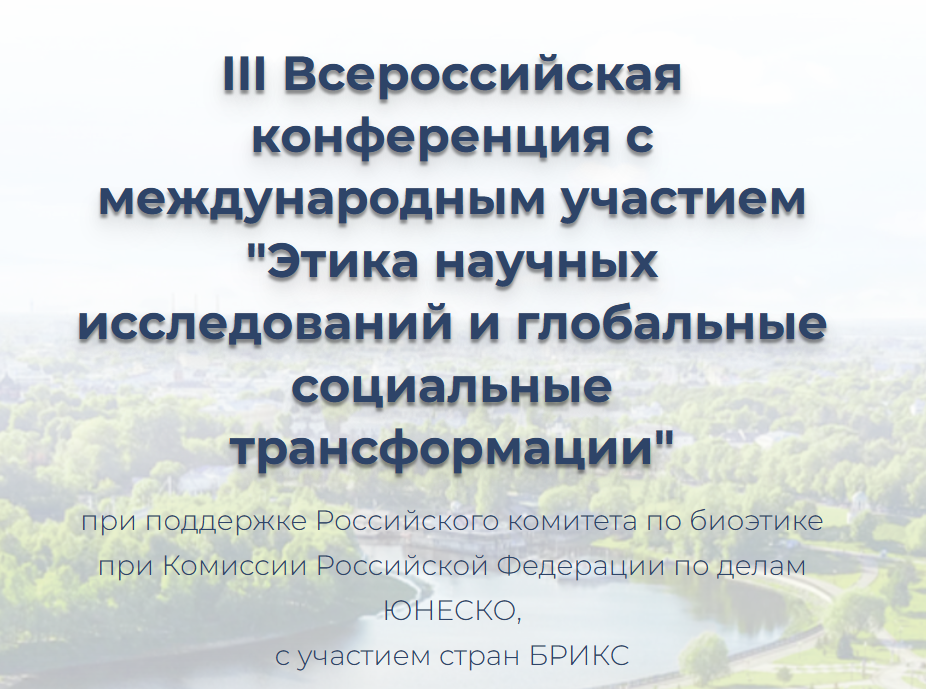
Форум пройдет 26-27 июня 2026 года в городе Ярославле на площадках Ярославского государственного медицинского университета и партнеров конференции


2026-06-01

Важная информация о публикации статей по генетическим исследованиям в связи с изменениями законодательства РФ

Уважаемые авторы! В связи с вступлением в силу Федерального закона от 20.02.2026 № 43-ФЗ «О внесении изменений в Федеральный закон "О государственном регулировании в области генно-инженерной деятельности"» редакция журнала информирует вас о следующих изменениях в порядке рассмотрения и публикации рукописей.


2026-05-28

В Москве состоялся IV Российский конгресс «Безопасность фармакотерапии 360°: Noli nocere!» с международным участием

С 18 по 23 мая 2026 года состоялся IV Российский конгресс «Безопасность фармакотерапии 360°: Noli nocere!» с международным участием, проведенный в соответствии с приказом Минздрава России. Событие прошло в смешанном формате и объединило ведущих экспертов в сфере клинической фармакологии, фармаконадзора и смежных дисциплин.


2026-05-24

Минздрав предложил исключить Scopus и Web of Science из оценки научных организаций

Минздрав России подготовил проект приказа о корректировке методики оценки результативности подведомственных научных организаций, выполняющих научно-исследовательские, опытно-конструкторские и технологические работы гражданского назначения.


2026-05-10

Политика журнала при выявлении фальсифицированной публикации

Об ответственности за фальсифицированное исследование (включая фальсификацию, совершённую с использованием генеративного искусственного интеллекта)

2026-05-05

Невидимая угроза: ведущие кардиологи рассказали об опасных болезнях сердца у детей

Обмороки, мышечная слабость, задержка роста и даже обычная усталость у ребенка могут оказаться признаками редкого и смертельно опасного заболевания сердца. Эти патологии могут оставаться незамеченными в течение длительного времени и приводить к жизнеугрожающим состояниям. О том, как своевременно распознать сердечно-сосудистые нарушения у детей, рассказали участники онлайн-конференции «Редкие болезни сердца ребенка в педиатрической практике», организованной проектом «Помощь редким» при поддержке компании «Фармимэкс». В мероприятии, прошедшем 23–24 апреля 2026 года, приняли участие более 1200 медицинских специалистов.


2026-04-29

29 апреля – Всемирный день осведомленности о болезни Фабри

Почему редкое генетическое заболевание диагностируют через 20 лет: чек-лист симптомов


2026-04-28

1 – 2 октября 2026 года состоится XI Санкт-Петербургский форум по ВИЧ-инфекции с международным участием

Представители профессионального сообщества, объединения пациентов и общественных организаций вновь встретятся на площадках форума для обсуждения современных аспектов профилактики, диагностики и лечения ВИЧ-инфекции.


2026-04-28

Актуальные проблемы ВИЧ-инфекции и других инфекционных заболеваний в Ленинградской области

14-15 мая 2026 года в Санкт-Петербурге состоится Научно-практическая конференция «Актуальные проблемы ВИЧ-инфекции и других инфекционных заболеваний в Ленинградской области», посвященная 20-летию ГБУЗ ЛО «Центр по профилактике и борьбе со СПИД и инфекционными заболеваниями».


2026-04-13

ВАК рекомендовала утвердить Единый государственный перечень научных изданий

2 апреля 2026 года Высшая аттестационная комиссия при Министерстве науки и высшего образования Российской Федерации (ВАК) приняла рекомендацию об утверждении Единого государственного перечня научных изданий (ЕГПНИ). Этот документ станет новым перечнем рецензируемых научных изданий, в которых должны быть опубликованы основные научные результаты диссертаций на соискание учёных степеней кандидата и доктора наук.


More Events...


Creative Commons License
This work is licensed under a Creative Commons Attribution 4.0 License.