


Contents
Scroll to:
https://doi.org/10.37489/2588-0519-GCP-0011
EDN: WNWUCW
Scroll to:
Numerous studies in recent years have shown that psoriasis is a systemic disease, often associated with comorbid pathology, which is due to common pathophysiological mechanisms. Concomitant chronic diseases significantly complicate the course of psoriasis, which is associated with difficulties in selecting therapy, causing doctors to doubt the efficacy and safety of a particular drug.
The article presents a clinical case of a patient with severe psoriasis and a large number of comorbid conditions who has been treated with guselkumab for five years. The use of an IL-23 inhibitor in the treatment of this patient has led to a reduction in clinical manifestations affecting the skin, nails, and musculoskeletal system, despite the large number of comorbidities. The safety and high efficacy of the drug allow for complete control of the disease and improve the quality of life of patients suffering from moderate to severe plaque psoriasis, and also demonstrate the need to use genetically engineered biological drugs even in patients with a large number of concomitant diseases.
Vikhreva M.N., Martynov A.A., Sychev D.A., Orlova E.A. Psoriasis in the context of comorbidities: a clinical case. Kachestvennaya Klinicheskaya Praktika = Good Clinical Practice. 2026;(1):17-22. (In Russ.) https://doi.org/10.37489/2588-0519-GCP-0011. EDN: WNWUCW
Psoriasis is a chronic disease of multifactorial nature, characterized by accelerated proliferation of keratinocytes and impaired differentiation, an imbalance between pro- and anti-inflammatory cytokines, and frequent pathological changes in the musculoskeletal system. According to statistical data, the prevalence of psoriasis in the Russian Federation in 2024 was 262.8 cases per 100,000 population; the incidence was 59.3 per 100,000 population. The therapeutic strategy for psoriasis is determined by patient characteristics (age, sex, comorbidities) and disease features (localization, severity).
Current understanding of the causes of the disease has allowed the development of long-term treatment strategies aimed at achieving therapeutic effect, long-term remissions, and consequently a marked improvement in quality of life and stabilization of the patient’s psychological status. For a long time, psoriasis was considered exclusively a dermatological pathology; however, sufficient data have now accumulated indicating a systemic nature of the lesion and the concomitant involvement of other organs and systems in the pathological process.
The complex pathophysiological mechanisms linking psoriasis and metabolic disorders are due to genetic predisposition, inflammatory processes, and shared risk factors [1]. The well-known concept of the “psoriatic march” suggests an increase in systemic chronic inflammation with pleiotropic effects on various processes such as angiogenesis, insulin signaling, adipogenesis, and lipid metabolism. It has been shown that psoriasis and metabolic comorbid conditions share common immunological mechanisms, particularly those associated with the activation of T‑helper 1 and T‑helper 17 cells [2]. Inflammatory mediators released from psoriatic plaques, including tumor necrosis factor (TNF)-α, interferon (IFN)-α, IFN-γ, interleukin (IL)-1, IL-6, and IL-17, can exert systemic effects, contributing to atherogenesis. In a recent study, comparative transcriptomic analysis revealed identical patterns in psoriasis and atherosclerosis [3], as well as in psoriasis and obesity [4]. In recent years, the issue of systemic inflammation involving adipose tissue, which contains various immune cells capable of stimulating the development of metabolic disorders, has been discussed. For example, in obese patients, the regulation of pro-inflammatory adipocytokines is disrupted due to their increased production, which contributes to the development of insulin resistance [5].
Inflammation associated with psoriasis may also trigger the development of non-alcoholic fatty liver disease [6], since pro-inflammatory cytokines and adipokines play a key role in the pathogenesis of these diseases.
Researchers emphasize the pathogenetic link between psoriasis, considered a prediabetic condition, and diabetes. Insulin resistance is likely one of the key factors of comorbidity [7].
Finally, anxiety and depression are often observed in patients with psoriasis, which are well-known risk factors for cardiovascular and metabolic diseases [8].
According to existing Russian and international clinical guidelines, systemic immunosuppressive therapy, targeted drugs, and genetically engineered biological agents (GEBAs) are indicated for moderate to severe psoriasis [9]. However, the presence of metabolic comorbidities significantly influences the choice and efficacy of pharmacological treatment.
Patient A., born in 1971, has been followed at the Penza Regional Clinical Center for Specialized Medical Care since 2004. He has been ill since the end of 1999, when rashes first appeared on the skin of the upper and lower extremities. Initially, he did not seek medical advice, self‑medicating with topical hormonal drugs, which led to worsening. Initially, the rashes were localized on the elbow bends and knees; over time, the process became more widespread, and rashes began to appear on the trunk and scalp. He presented to the Penza Regional Clinical Center for Specialized Medical Care in early 2004 with complaints of rashes on the scalp, trunk, upper and lower extremities, extensor surfaces of the elbow and knee joints, and moderate itching. Examination also revealed involvement of all nail plates of the hands and feet in the form of subungual hyperkeratosis. The diagnosis was made: plaque psoriasis, severe, progressive stage, PASI >20, DLQI-15. Throughout the follow‑up period, the patient experienced annual exacerbations 2–3 times per year, non‑seasonal. For the last 17 years, exacerbations have been accompanied by features of erythroderma. Pain in large joints (knees, ankles, hips) has been present for more than 15 years, with occasional pain in the small joints of the hands and feet. He was examined by rheumatologists, and a diagnosis of psoriatic polyarthritis was confirmed. Due to the worsening of the patient's condition, the diagnosis was changed to: widespread large‑plaque psoriasis with a tendency to erythroderma. Progressive stage. Psoriatic polyarthritis grade 2. Psoriatic onychodystrophy. He regularly received outpatient and inpatient treatment (methotrexate 15 mg per week subcutaneously, PUVA therapy, plasmapheresis, NSAIDs). During 2018, the duration of hospitalizations exceeded 6 months. Disability group 3 was assigned. In 2019, he suffered a myocardial infarction. Special attention is drawn to the significant number of comorbid pathologies in this patient.
Comorbid diagnosis: Coronary artery disease. Angina pectoris class 3. Post‑infarction cardiosclerosis (2019). Hypertension stage 3, risk 4. Chronic heart failure stage 2A, class 3. Type 2 diabetes mellitus. Mixed‑type bronchial asthma, moderate severity, uncontrolled course. Respiratory insufficiency grade 0–1. Chronic obstructive pulmonary disease, mixed type, moderate severity. In 2020, considering the complaints, medical history, continuously relapsing disease course, total skin involvement, persistent joint pain, lack of effect from previous therapy, and methotrexate intolerance (development of allergic reactions), genetically engineered biological therapy was indicated for the patient. The patient was referred for examination and consultations with specialists: chest radiography in two projections; complete blood count; urinalysis; determination of HBsAg and anti‑HCV antibodies; consultation with a phthisiatrist, infectious disease specialist, cardiologist, and pulmonologist. The examination revealed no contraindications to genetically engineered biological therapy.
Treatment: In December 2020, the medical council prescribed the IL‑23 blocker guselkumab at a dose of 100 mg as subcutaneous injections according to the classic schedule (loading dose, second injection at week 4, then every 8 weeks).
Outcome and follow‑up results: During therapy, a marked positive dynamics was observed. No new rashes appeared; infiltration and scaling of plaques almost completely disappeared; joint pain significantly decreased. By week 24 of treatment, near‑complete regression of rashes was achieved; after 6 months, the patient showed growth of healthy nail plates not affected by psoriasis, with pathological nail changes present only at the free edge: PASI score – 8 (achieved only PASI 90); DLQI-0. Currently, the patient continues to receive guselkumab therapy (256 weeks) and is in a state of drug‑induced remission of psoriasis (Fig. 2, December 2025). During treatment with guselkumab (from December 2020 to December 2025), all comorbid pathologies remained compensated. Regular examinations and consultations with related specialists were conducted to manage concomitant conditions.
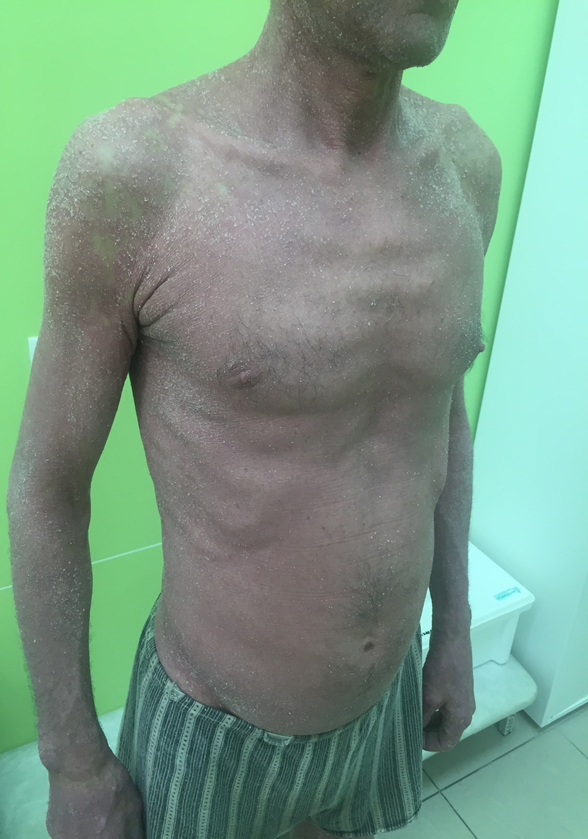 | 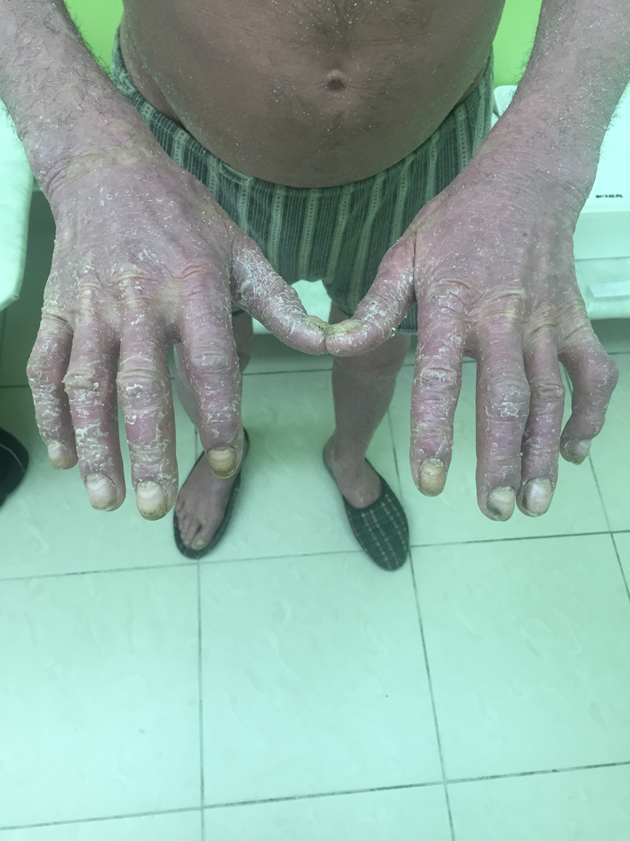 |
| Trunk, anterior view | Hands, dorsal surface and nail plates |
Fig. 1. Patient A. Before the start of therapy (photo from December 2020)
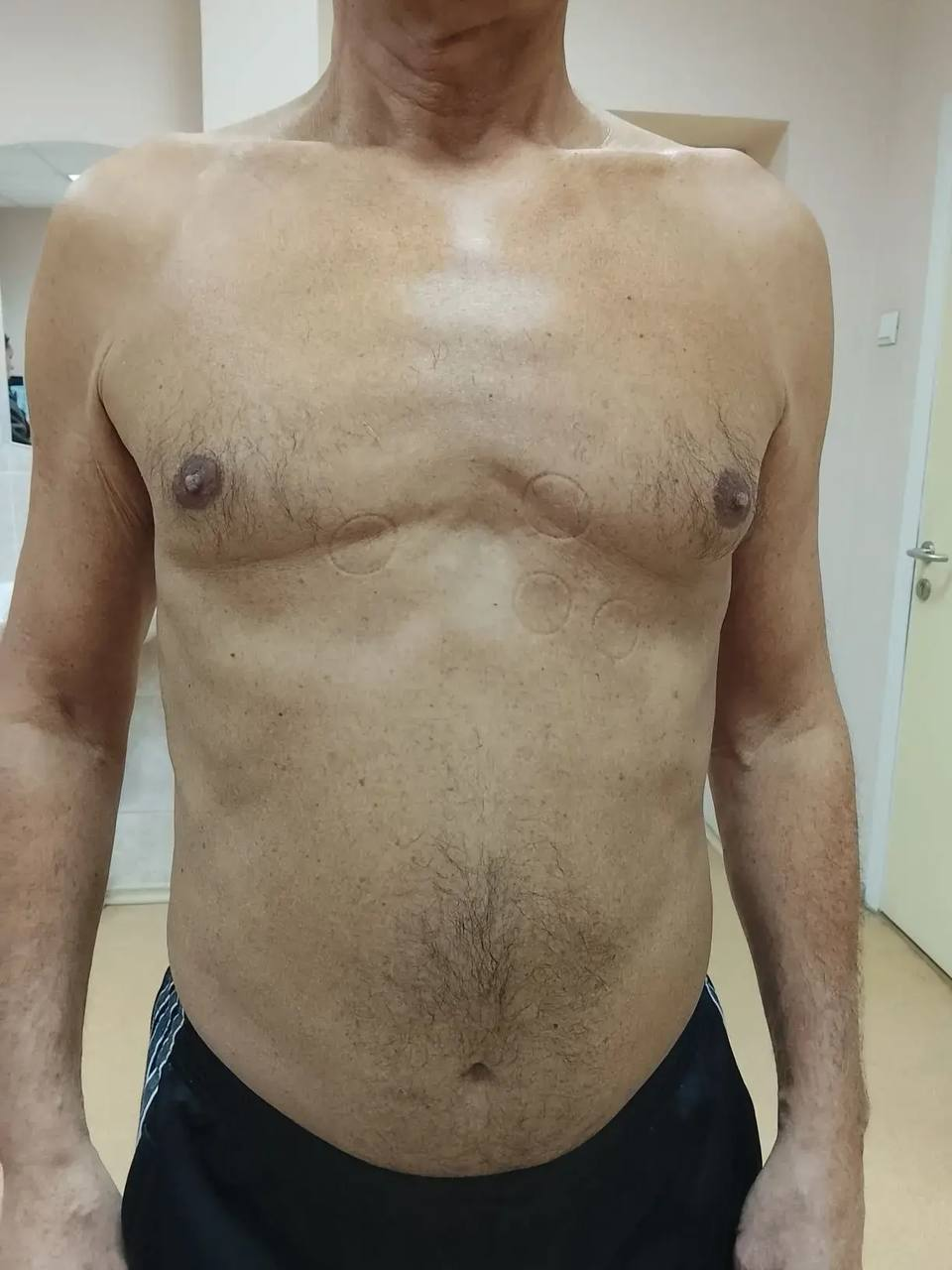 | 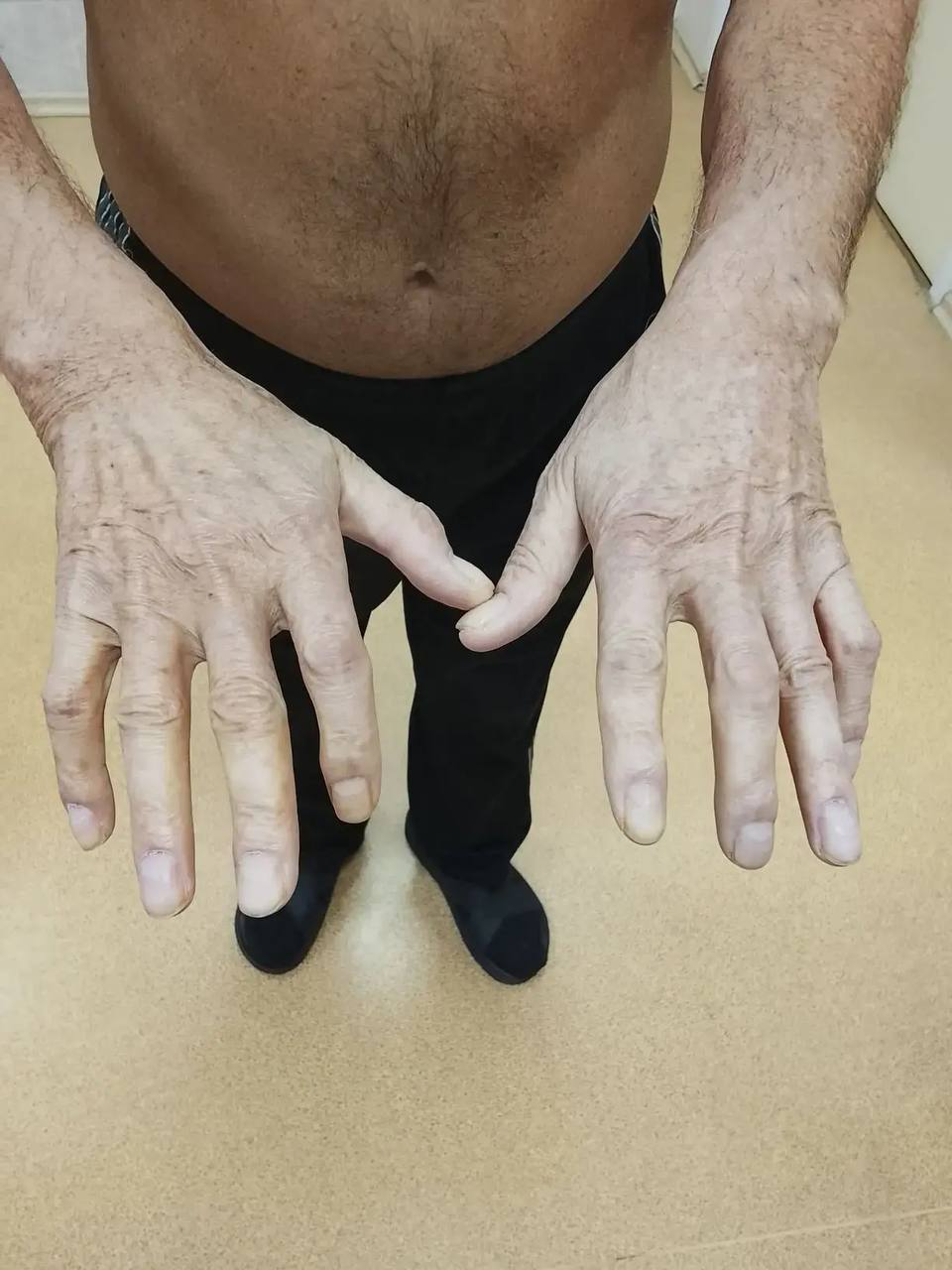 |
| Trunk, anterior view | Hands, dorsal surface and nail plates |
Fig. 2. Patient A. Dynamics of the skin process at 256 weeks of therapy (photo from December 2025)
The described clinical case demonstrated the high efficacy and safety of guselkumab in the treatment of a patient with erythrodermic psoriasis. PASI scores were 90 at weeks 8, 16, and 24 of guselkumab therapy. Upon continued treatment for 256 weeks, the therapeutic effect was maintained. The frequency of adverse events during therapy was low.
This clinical case confirms the efficacy and safety of guselkumab for the treatment of patients with psoriatic erythroderma. The success of therapy is due to the pharmacological properties of the drug. IL-23 inhibitors provide long‑term control of the inflammatory process, minimizing the need for drug switching. This makes them a valuable tool for managing psoriasis, especially in patients with severe disease or previous treatment failure. In the future, emphasis should be placed on developing specific biomarkers to predict response to genetically engineered biological therapy and conducting studies with larger sample sizes. Such a strategy will enable a personalized approach in the treatment of psoriasis and improve the quality of life of patients suffering from this pathology.
1. Gisondi P, Bellinato F, Girolomoni G, Albanesi C. Pathogenesis of Chronic Plaque Psoriasis and Its Intersection With Cardio-Metabolic Comorbidities. Front Pharmacol. 2020 Feb 25;11:117. doi: 10.3389/fphar.2020.00117.
2. Orlando G, Molon B, Viola A, et al. Psoriasis and Cardiovascular Diseases: An Immune-Mediated Cross Talk? Front Immunol. 2022 May 24;13:868277. doi: 10.3389/fimmu.2022.868277.
3. Mehta NN, Teague HL, Swindell WR, et al. IFN-γ and TNF-α synergism may provide a link between psoriasis and inflammatory atherogenesis. Sci Rep. 2017 Oct 23;7(1):13831. doi: 10.1038/s41598-017-14365-1
4. Antonatos C, Georgakilas GK, Evangelou E, Vasilopoulos Y. Transcriptomic meta-analysis characterizes molecular commonalities between psoriasis and obesity. Genes Immun. 2024 Jun;25(3):179-187. doi: 10.1038/s41435-024-00271-w.
5. Brazzelli V, Maffioli P, Bolcato V, et al. Psoriasis and Diabetes, a Dangerous Association: Evaluation of Insulin Resistance, Lipid Abnormalities, and Cardiovascular Risk Biomarkers. Front Med (Lausanne). 2021 Mar 23;8:605691. doi: 10.3389/fmed.2021.605691
6. Heitmann J, Frings VG, Geier A, et al. Non-alcoholic fatty liver disease and psoriasis - is there a shared proinflammatory network? J Dtsch Dermatol Ges. 2021 Apr;19(4):517-528. doi: 10.1111/ddg.14425
7. Brazzelli V, Maffioli P, Bolcato V, et al. Psoriasis and Diabetes, a Dangerous Association: Evaluation of Insulin Resistance, Lipid Abnormalities, and Cardiovascular Risk Biomarkers. Front Med (Lausanne). 2021 Mar 23;8:605691. doi: 10.3389/fmed.2021.605691
8. Nast A, Smith C, Spuls PI, et al. EuroGuiDerm Guideline on the systemic treatment of Psoriasis vulgaris - Part 2: specific clinical and comorbid situations. J Eur Acad Dermatol Venereol. 2021 Feb;35(2):281-317. doi: 10.1111/jdv.16926
9. Yen H, Huang C-H, Huang I-H, et al. Systematic review and critical appraisal of psoriasis clinical practice guidelines: a Global Guidelines in Dermatology Mapping Project (GUIDEMAP). Br J Dermatol. 2022;187:178-187. Doi: 10.1111/bjd.21047
Maria N. Vikhreva — Assistant Professor, Department of Allergology and Immunology with a Course in Dermatovenereology and Cosmetology
Penza
The authors declare no conflict of interest
Andrey A. Martynov — Dr. Sci. (Med.), Professor, Department of Dermatovenereology and Cosmetology
Moscow
The authors declare no conflict of interest
Dmitry A. Sychev — Dr. Sci. (Med.), Professor, Professor of the Russian Academy of Sciences, Academician of the Russian Academy of Sciences, Head of the Department of Clinical Pharmacology and Therapy named after B. E. Votchal
Moscow
The authors declare no conflict of interest
Ekaterina A. Orlova — Dr. Sci. (Med.), Associate Professor, Head of the Department of Allergology and Immunology with a course in dermatovenereology and cosmetology
Penza
The authors declare no conflict of interest
Vikhreva M.N., Martynov A.A., Sychev D.A., Orlova E.A. Psoriasis in the context of comorbidities: a clinical case. Kachestvennaya Klinicheskaya Praktika = Good Clinical Practice. 2026;(1):17-22. (In Russ.) https://doi.org/10.37489/2588-0519-GCP-0011. EDN: WNWUCW
НАШИ КНИГИ



Другие журналы
"Издательства ОКИ"


ПАРТНЕРЫ

 Email this article (Login required)
Email the author (Login required)
Email this article (Login required)
Email the author (Login required) 121357, Moscow, st. Vatutina, 4, building 2, apt. 22
LLC Publishing House OKI
Tel. +7 (926) 568-17-35
e-mail: clinvest@mail.ru


