


Contents
Scroll to:
https://doi.org/10.37489/2588-0519-GCP-0035
EDN: KRLYKE
Scroll to:
Background. Despite the advancement of modern surgical technologies, the rates of postoperative complications and mortality in the treatment of perforated ulcer (PU) show no tendency to decline.
Objective. To evaluate the clinical efficacy of an endoluminal method for the prevention of postoperative complications following suturing or excision of a perforated duodenal ulcer (DU).
Material and methods. Th is study presents the results of surgical treatment of 86 patients with perforated duodenal ulcer. The patients were allocated into two groups: a control group (n = 53) and a main (intervention) group (n = 33). More than 75.0 % of patients in both groups were young and middle-aged men. Open and laparoscopic surgical techniques were employed in both groups; additionally, in the main group, a novel method for the prevention of postoperative complications after DU perforation suturing was applied (RF patent RU2581709C2).
Results. In the control group, a combination of anterior wall ulcer perforation and bleeding from a "mirror" ulcer of the duodenal posterior wall was diagnosed in 8 (15.1 %) patients. The following postoperative complications were observed in the control group: suture line bleeding in 9 (17.0 %) cases, suture failure in 2 (3.8 %) cases, and paralytic ileus in 17 (32.1 %) cases. One patient died postoperatively, resulting in a mortality rate of 1.2 %. In the main (intervention) group, no postoperative complications or fatal outcomes were observed, indicating the high effectiveness of the developed endoluminal method for preventing postoperative complications in the surgical management of perforated duodenal ulcer.
Conclusion. The use of our proprietary multifunctional nasoduodenal tube, which enables a combination of intraluminal compression of the Tachocomb collagen patch to the anterior wall suture line, coverage of the "mirror" ulcer on the posterior duodenal wall, and effective duodenal decompression during the postoperative period, allowed for the prevention of postoperative complications and mortality in patients of the main group.
Abdulzhalilov M.K., Saiddibirov Sh.M. Evaluation of the effectiveness of an endoluminal method for preventing postoperative complications after suturing a perforated duodenal ulcer. Kachestvennaya Klinicheskaya Praktika = Good Clinical Practice. 2026;(2):156-167. (In Russ.) https://doi.org/10.37489/2588-0519-GCP-0035. EDN: KRLYKE
Perforation of gastric and duodenal ulcers remains one of the most common complications of peptic ulcer disease [1].
Most frequently (67%), this complication occurs in young men suffering from duodenal ulcer [2].
The most common surgical treatment for perforated ulcer (94.0%) remains suturing of the perforation via open or laparoscopic approach [3].
Nevertheless, some specialists consider suturing of a perforated ulcer not only a palliative intervention that does not cure the patient of the ulcer [4, 5], but also an operation that reduces the reliability of sutures placed on the inflamed, scarred margins of the perforation, creating conditions for the progression of inflammatory changes in the tissues surrounding the ulcer and increasing the rate of suture failure, which necessitates the development of modern methods for preventing postoperative complications.
Other researchers consider excision of the ulcerative infiltrate together with the perforation opening and suturing of the organ wall to be a radical intervention that cures the patient of the ulcer [6, 7].
At the same time, specialists select the type and extent of surgical intervention according to the equipment of the medical facility, the location and nature of the ulcerative lesion, the duration of perforation, the patient's age, the extent of peritonitis and its stage, as well as the surgeon's decision to forego the laparoscopic approach [2, 8].
To close the perforation, surgeons use a pedicle of the greater omentum, the wall of the organ bearing the perforation or an adjacent organ, the round ligament of the liver, form a covered perforation as a fold of the gastric wall duplication, use a clip for perforation closure or a covered stent with perforation closure, endoscopic techniques using the omentum, etc. [9, 10].
Despite significant advances in surgical technologies used in the treatment of patients with perforated ulcer, the rates of postoperative complications range from 6-26.0% [11].
Surgeons consider the following as complicating factors: severe general condition of the patient, concomitant pathology of the cardiovascular and respiratory systems, hepatic-renal insufficiency, elderly and senile age, late hospitalization, perforation diameter greater than 10 mm and its complex localization, pronounced infiltration of the perforation margins, and suture cutting through when tying knots [9, 12, 13, 14].
The most frequent and dangerous postoperative complication following suturing of perforated ulcer remains suture failure to the present day [9]. To reduce its incidence, single-row and double-row seromuscular sutures are employed, using non-absorbable or absorbable suture material with antimicrobial properties, as well as biodegradable synthetic materials to cover the suture line, endoscopic retraction of the omental pedicle through the perforation into the duodenal lumen, etc. [15]. However, cutting through of sutured tissues contributes not only to suture dehiscence but also to bleeding from the sutured defect, even during laparoscopic surgery when, to prevent suture failure, the suture line is covered with a pedicled greater omentum flap, which is often absent in cachectic patients with peptic ulcer disease.
Suture failure following suturing or excision of perforated ulcer is observed in both open, laparoscopic, and endoscopic operations.
Thus, current literature data indicate that one of the most pressing problems in the surgical treatment of patients with perforated ulcer remains the prevention of suture failure, which requires the development and implementation of endoluminal surgical technologies to enhance their reliability, not only by reducing intraluminal hypertension but also by preventing direct contact of the suture line with aggressive intestinal contents.
To evaluate the clinical efficacy of an endoluminal method for the prevention of postoperative complications after suturing (excision) of a perforated duodenal ulcer (DU).
As a result of a retrospective cohort study, an analysis was conducted of the surgical treatment of 86 patients with perforated duodenal ulcer operated on at the clinical bases of the Department of Surgery of the Faculty of Advanced Training and Professional Development with courses in Endoscopic Surgery and Transfusiology of the Dagestan State Medical University of the Ministry of Health of the Russian Federation, at the Central City Hospital of Khasavyurt, and at the Central City Hospital of Derbent. The patients were divided into 2 groups: control group (n=53) and intervention group (n=33).
The distribution of patients by age and gender is presented in Table 1.
Table 1
Distribution of patients in the control and main groups by age and gender
| Age | Control Group | Main Group | ||||||
|---|---|---|---|---|---|---|---|---|
| (years) | Male | Female | Male | Female | ||||
| Abs. | % | Abs. | % | Abs. | % | Abs. | % | |
| Young (18-44) | 33 | 66.0* | 1 | 33.3* | 9 | 36.0* | 5 | 62.5* |
| Middle (45-59) | 9 | 18.0* | - | - | 11 | 44.0* | 1 | 12.5* |
| Elderly (60-74) | 6 | 12.0* | - | - | 4 | 16.0* | 2 | 25.0* |
| Senile (75-90) | 2 | 4.0* | 2 | 66.7* | 1 | 4.0* | - | - |
| Total: | 50 | 94.3** | 3 | 5.7%** | 25 | 75.8%** | 8 | 24.2%** |
| 95% CI | 95% CI | |||||||
| 84.2; 98.1 | 56.4; 88.4 | |||||||
| Notes: * — data calculated as a percentage of the number of patients in the group; ** — data calculated as a percentage of the total number of patients in the group. |
The data presented in Table 1 indicate that in the control group of patients with perforated ulcer, more than 84.0% are of young and middle age, every ninth is elderly, and every twenty-fifth is senile. In the control group, there were only 3 (5.7%) female patients, of whom 2 (66.7%) were of senile age.
The main group consisted of 25 (75.8%) men and 8 (24.2%) women, which corresponds to the indicators of the control group. The total number of men of young and middle age — 25 (80.0%) — is the same as in the control group, elderly and senile — 8 (15.1%), which corresponds to the proportion of patients in the control group. The 95% CI (confidence interval) according to the Wilson method for small samples of patients in the control group ranges from 84.2-98.1%, and in the main group — 56.4-88.4%. The confidence intervals partially overlap: the upper boundary of the CI of the main group (88.4%) exceeds the lower boundary of the CI of the control group (84.2%), which does not allow an unambiguous conclusion about the statistical significance of the differences without calculating the p-value.
Table 2 presents the distribution of comorbidity in the compared groups of patients with PU.
Table 2
Common comorbidities in patients with perforated ulcers
| Age | Comorbidity | Control | Main | ||
|---|---|---|---|---|---|
| Young | Suffers from peptic ulcer disease | 10 | 18.2% | 6 | 18.2% |
| 18-44 years | Consumes energy drinks | 10 | 18.2% | 5 | 15.2% |
| Previously underwent PU suturing | 3 | 9.1% | - | - | |
| Suffers from type 2 diabetes mellitus | 2 | 3.0% | 3 | 9.1% | |
| Takes NSAIDs | 2 | 3.0% | - | - | |
| Single cases of comorbidity in one patient: bronchial asthma, hypertension, hydronephrosis, pulmonary tuberculosis, chronic inflammatory lung disease | 2 | 3.0% | 3 | 9.1% | |
| Middle | Previously underwent PU suturing | 2 | 22.3% | 2 | 6.1% |
| 45-59 years | Suffers from schizophrenia | 2 | 22.3% | - | - |
| Elderly | Suffers from peptic ulcer disease | 3 | 50.0% | - | - |
| 60-74 years | Suffers from hypertension | 1 | 16.7% | 4 | 12.1% |
| Previously underwent PU suturing | 1 | 16.7% | - | - | |
| Senile | Suffers from hypertension | 1 | 50.0% | 2 | 6.1% |
| 75-90 years | Suffers from type 2 diabetes mellitus | 1 | 50.0% | - | - |
The data presented in Table 2 indicate that in both analyzed groups, 18.2% of young patients suffer from peptic ulcer disease, with 18.2% of control group patients and 15.2% of the main group abusing energy drinks. It has been established that consumption of energy drinks contributes to damage to the mucous membrane with the formation of large and deep ulcers [16]. A history of suturing for perforated ulcer was reported in 9.1%, and 3.0% of control group patients took non-steroidal anti-inflammatory drugs, while 3.0% of control group patients and 9.1% of the main group suffered from other chronic diseases. Diabetes mellitus was present in 3.0% of control group patients and 9.1% of the main group.
Among middle-aged patients, 22.3% in the control group had previously undergone suturing for perforated ulcer, compared to 6.1% in the main group, while 22.3% of control group patients suffered from schizophrenia.
Among elderly patients, 50.0% of the control group suffered from peptic ulcer disease but were not under dispensary follow-up and neglected anti-ulcer therapy, which, in our opinion, was the cause of perforation. Hypertension was present in 16.7% of control group patients and 12.1% of the main group.
Among senile patients in the control group, 50.0% suffered from hypertension, while in the main group only 6.1%. Diabetes mellitus was present in 1 (50.0%) patient in the control group.
Elderly and senile patients suffered from peptic ulcer disease, which resulted not only from age-related decrease in gastric vascular tone and spasm, but also from increased atrophic processes in the gastric mucosa and impaired microcirculation with reduced protective barrier [17]. It was also established that when arterial hypertension is combined with peptic ulcer disease, there is an intensification of pain and dyspeptic syndromes, and hypertension acquires a crisis course. Peptic ulcer disease in patients with severe diabetes is characterized by refractoriness to treatment, and the prevalence of Helicobacter pylori becomes higher, with worse eradication results than in patients with peptic ulcer disease without diabetes mellitus [18], which accounts for the severe course of peptic ulcer disease in these patients.
On the day of hospitalization, all patients with suspected perforated ulcer underwent ultrasound examination (US), plain radiography of the abdominal organs in the upright position with inclusion of the lower third of the chest, and computed tomography and fibrogastroduodenoscopy (FGDS) only when indicated. Plain radiography failed to diagnose pneumoperitoneum in 17.6% of patients. In this subgroup, pneumogastrography, FGDS, or abdominal CT was performed, which improved diagnostic quality. FGDS was performed in 12 patients; perforation was identified in only 1 (8.3%) case, perforation with duodenal bleeding in 2 (16.6%), and a combination of anterior wall ulcer perforation with bleeding from a "mirror" ulcer (Forrest 2B) in 3 (25.0%) patients.
On abdominal ultrasound, attention was focused on the presence of gas and effusion, the nature, location, and amount of exudate were assessed, the condition of the gastric and duodenal walls was evaluated, as well as signs of paralytic ileus. It should be noted that in cases of doubtful diagnosis in all patients, even in the absence of abdominal effusion on ultrasound, pronounced pneumatization of the large intestine was recorded, which was an indication for diagnostic laparoscopy to clarify the diagnosis of perforated duodenal ulcer.
The following table presents the distribution of patients in the compared groups with perforated ulcer by time of hospitalization.
Table 3
Distribution of patients by age and length of hospitalization
| Patient Age | Time to Hospitalization | TOTAL | ||||||||
|---|---|---|---|---|---|---|---|---|---|---|
| Up to 6 hours | 6 to 12 hours | 12 to 24 hours | More than 24 hours | |||||||
| Patient Groups | ||||||||||
| Control | Main | Control | Main | Control | Main | Control | Main | Control | Main | |
| Young | 13 | 5 | 8 | 3 | 6 | 2 | 8 | 2 | 35 | 12 |
| 37.1% | 41.6% | 22.9% | 25.0% | 17.1% | 16.7% | 22.9% | 16.7% | 66.0% | 36.4% | |
| Middle | 3 | 3 | 1 | 5 | 2 | 1 | 3 | 5 | 9 | 14 |
| 33.3% | 33.3% | 11.1% | 35.7% | 22.2% | 7.1% | 33.9% | 35.7% | 25.7% | 42.4% | |
| Elderly | - | 1 | - | 2 | 1 | 1 | 5 | - | 6 | 4 |
| 25.0% | 50.0% | 16.7% | 25.0% | 83.3% | 11.3% | 12.1% | ||||
| Senile | - | - | - | 1 | - | 1 | 3 | 1 | 3 | 3 |
| 33.3% | 33.3% | 100.0% | 33.3% | 5.7% | 9.1% | |||||
| TOTAL: | 16 | 9 | 9 | 11 | 9 | 5 | 19 | 8 | 53 | 33 |
| 30.4% | 27.2% | 17.0% | 33.3% | 17.0% | 15.1% | 35.9% | 24.2% | |||
| 95% CI | 95% CI | |||||||||
| 24.0%–42.7% | 11.2%–32.9% |
The data presented in Table 3 indicate that within 6 hours of symptom onset, 37.1% of young patients in the control group were hospitalized versus 41.6% in the main group; the same indicator was observed in middle-aged patients (33.3%) in both groups; and every 4th elderly patient in the main group.
Between 6 and 12 hours, 22.9% of control group patients and every 4th patient in the main group were hospitalized, as well as 50.0% of elderly patients.
Between 12 and 24 hours, 17.1% of young patients in the control group and 16.7% in the main group were hospitalized; in middle-aged patients, 22.2% and 33.3%, respectively.
More than 24 hours after symptom onset, the following patients were hospitalized:
Young age — 22.9% (8 of 35) in the control group and 16.7% (2 of 12) in the main group;
Middle age — 33.3% (3 of 9) in the control group and 35.7% (5 of 14) in the main group;
Elderly — 83.3% (5 of 6) in the control group and 0% (0 of 4) in the main group;
Senile — 100.0% (3 of 3) in the control group and 33.3% (1 of 3) in the main group.
Analysis of the results showed that more than 24 hours after symptom onset, every second or third patient in the control group and every third patient in the main group was hospitalized, which equalizes the negative impact of late hospitalization on the results of surgical treatment of patients with perforated ulcer in both groups.
More than 24 hours after perforation, 19 (35.9%) of 53 patients from the control group were hospitalized (Wilson 95% CI 24.0–42.7%), and from the main group — 8 of 33 (Wilson 95% CI 11.2–32.9%). The confidence intervals overlap (the upper boundary of the CI of the main group — 32.9%, which is higher than the lower boundary of the CI of the control group — 24.0%). This indicates that it allows for a sufficiently reliable assessment of the effectiveness of the new method for preventing postoperative complications in the surgical treatment of perforated duodenal ulcer.
The distribution of patients in the control and main groups by the extent of peritonitis is presented in the following diagram (Fig. 1).
Fig. 1. Distribution of patients with perforated ulcer by prevalence of peritonitis (in %)
The data presented in the diagram in Fig. 1 indicate that patients in the control group were distributed by the extent of peritonitis as follows: local peritonitis in 43.3% of patients, diffuse in 26.6%, and generalized in 28.3%.
Patients in the main group were distributed as follows: local peritonitis was diagnosed in 24.2% of patients, significantly lower than in the control group; diffuse in 42.4%, which is conversely higher than in the control group; and generalized in 33.3% of patients, corresponding to the control group indicator, since the development of postoperative complications and mortality depend on the extent and nature of peritonitis.
Thus, in the main group, the indicators of peritonitis prevalence in perforated duodenal ulcer are higher than in the control group, which necessitates the introduction of new, more advanced technologies for the prevention of postoperative complications in the early postoperative period.
The distribution of patients with perforated duodenal ulcer by the nature of peritoneal exudate is presented in the following diagram (Fig. 2).
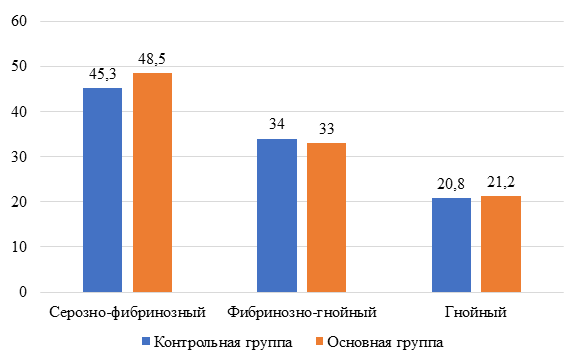
Fig. 2. Distribution of patients with perforated ulcer by the nature of peritonitis (in %)
The data presented in the diagram in Fig. 2 indicate the comparability of the compared groups by the nature of peritonitis, which allows for an objective assessment of the effectiveness of the new method for preventing postoperative complications in the surgical treatment of patients with perforated ulcer in the main group.
Consequently, the obtained data from the compared groups allow for a reliable assessment of the effectiveness of the developed method for preventing postoperative complications in the surgical treatment of patients with perforated duodenal ulcer.
Combined perforation and bleeding were present in 8 (15.1%) patients in the control group out of 53: 6 (75.0%) of young age and 2 (25.0%) of elderly and senile age. In cases of combined perforation and bleeding, the perforation diameter in young patients averaged 9.67±2.6 mm with a hemoglobin decrease of 24.6% (to 98.6±8.6 g/L), corresponding to moderate and severe blood loss according to A.I. Gorbashko (1974), and in senile patients, 11.0±2.6 mm and 106±10.4 g/L (p >0.05) (18.5%) corresponding to mild anemia. Upon hospitalization of patients with perforated ulcer combined with bleeding and moderate or severe anemia, we consider it appropriate to include, when indicated, transfusion of group-compatible packed red blood cells in the preoperative preparation to correct anemia.
Along with this, analysis of our clinical material showed that in the early postoperative period after suturing of perforated duodenal ulcer using coarse suture material (Vicryl 2/0), in 9 (17.0%) patients we observed a hemoglobin decrease averaging 34.9±3.92 g/L (23.0% of the average value), which we attribute to bleeding from the duodenal suture line as a result of trauma to the periulcerous inflammatory infiltrate by the suture material.
Clinical case 1. Patient I., 42 years old (medical record No. 4809), was brought by emergency medical services and hospitalized in the surgical department of the Republican Clinical Hospital of Emergency Medical Care 30 hours after the onset of severe abdominal pain. History of hepatitis C. Abdominal ultrasound revealed 400 mL of turbid effusion; plain radiography in the upright position revealed pneumoperitoneum. After preoperative preparation, surgery was performed: laparoscopic suturing of a perforated anterior wall duodenal ulcer 3 mm in diameter with three endoscopic Vicryl 2/0 sutures and omental patch coverage of the suture line in the setting of diffuse purulent-fibrinous peritonitis in the toxic stage. In the postoperative period, hemorrhagic discharge up to 60 mL with clots was observed from the drain. Ultrasound of the proximal duodenum revealed distension of the duodenal lumen with contents, and a fluid stripe was visualized around it. C-reactive protein level was 289.6 mg/L. Hemoglobin decreased from 129 to 117 g/L (9.3%). Conservative therapy over 19 bed-days led to improvement in the patient's condition.
In 3 (15.0%) cases, bleeding from the suture line was diagnosed during suturing of a gastric ulcer perforation (2 cases) and in one case during suturing of a perforated gastrojejunal anastomosis ulcer. In 2 (3.4%) cases, suture failure was observed after suturing of perforated duodenal ulcer, one (1.7%) of which resulted in the death of a 75-year-old patient with diffuse peritonitis.
Clinical case 2. Patient A., 75 years old (medical record No. 4552), was brought by emergency medical services to the Republican Clinical Hospital of Emergency Medical Care on April 22, 2025, at 01:50, 72 hours after the onset of intense abdominal pain, and hospitalized in the surgical department. Comorbidities: hypertension grade 2, uncontrolled arterial hypertension, risk of cardiovascular complications 3, nephrostomy for right kidney disease. Abdominal ultrasound revealed turbid effusion with fibrin up to 800 mL, dilatation of small bowel loops, absence of peristalsis, and pneumatization of the large intestine with pendulum-like peristalsis. Laboratory findings: severe anemia, hemoglobin 63 g/L, leukocytosis 23.0×10^9/L, urea 23.2 mmol/L, creatinine 413 μmol/L, total protein 42.0 g/L. After preoperative preparation, diagnostic laparoscopy was performed, followed by conversion, suturing of a perforated anterior wall duodenal ulcer 10 mm in diameter with a periulcerous inflammatory infiltrate of 15 mm according to Oppel-Polykarpov, lavage and drainage of the abdominal cavity. Mannheim Peritonitis Index 32 points. Central venous pressure was 20 mm H₂O. Postoperatively, the patient was transferred to the intensive care unit. On the 3rd postoperative day, the patient's condition deteriorated, and turbid hemorrhagic discharge began to flow through the abdominal drains, which was interpreted as suture failure of the sutured ulcer. The council recommended programmed abdominal lavage, which the relatives refused, and the patient was taken home.
To prevent the above-mentioned complications in the early postoperative period after suturing of perforated ulcer, we have proposed a nasoduodenal tube of our own design (RF patent RU 2 581 709 C2 "Method for the prevention of postoperative complications in suturing of perforated ulcer of the duodenal bulb"). The essence of our method consists in sealing the suture line after ulcer suturing to prevent suture failure, bleeding from the suture line of the anterior wall and the "mirror" ulcer of the posterior wall through dosed compression of Tachocomb plates to the problem areas. The tube with an inflatable cuff was inserted through the nasal passage, esophagus, and stomach into the duodenum during laparoscopy under video-duodenoscope control, and during open surgery — under the control of the operating surgeon. After localization of the balloon in the projection of the ulcer perforation, the posterior duodenal wall was inspected. If a "mirror" ulcer was present, a Tachocomb plate of dimensions exceeding the pathological focus by 10 mm in all directions was placed on its surface. Then, on the anterior surface of the balloon from the duodenal mucosal side in the projection of the perforation, a Tachocomb plate of dimensions exceeding the dimensions of the suture line of the anterior duodenal wall was placed. The perforation area was then sutured with seromuscular-submucosal interrupted sutures. After tying the sutures, the balloon of the nasointestinal tube was inflated to achieve moderate compression of the Tachocomb plate along the suture line from the duodenal lumen side, increasing its initial diameter in the cuff area by no more than 1/4 of the original. In the early postoperative period, our tube design allows for local hemostasis from the posterior wall ulcer, hemostasis and sealing of the anterior wall suture line, as well as decompression of the small intestine in paralytic ileus due to peritonitis by evacuating its contents outward to reduce intraluminal pressure. The developed method provides prevention of postoperative complications through sealing of sutures, reliable hemostasis from the suture line and "mirror" ulcer, and effective drainage and decompression of the small intestine in the early postoperative period.
Our experimental studies [19] on dogs convincingly demonstrated that inflation of the balloon of the nasointestinal tube in the small intestinal lumen to increase its external diameter by no more than 1/4 of the original corresponds to an intraluminal pressure of 20.5±3.4 mmHg, which does not lead to impaired microcirculation and hypoxia of its wall due to adaptation of intestinal wall blood flow to local distension. It was also reliably established that impairment of intestinal wall blood flow with necrosis was recorded at intraluminal pressure exceeding 40 mmHg.
Table 4 presents data on the recovery of motor-evacuatory function of the gastrointestinal tract in the early postoperative period in patients of the control and main groups.
Table 4
Dynamics of recovery of the motor-evacuation function of the gastrointestinal tract in patients in the control and main groups
| Patient Groups | Resolution of Abdominal Distension (days) | Time to Passage of Flatus (days) | Spontaneous Bowel Movement (days) | Mean Length of Stay (bed-days) |
|---|---|---|---|---|
| Control Group | 3.62±0.22 | 4.19±0.23 | 5.64±0.26 | 7.98±0.26 |
| 95% CI (4.05-3.19) | 95% CI (3.74-4.64) | 95% CI (5.13-6.15) | 95% CI (7.47-8.49) | |
| Main Group | 1.04±0.04 | 1.11±0.24 | 4.82±0.25 | 6.95±0.38 |
| 95% CI (1.12-0.96) | 95% CI (0.64-1.58) | 95% CI (4.31-5.33) | 95% CI (6.18-7.72) | |
| p-value | <0.05 | <0.05 | <0.05 | <0.05 |
The data presented in Table 4 indicate earlier resolution of postoperative paresis in patients of the main group, in whose treatment we used our developed tube with Tachocomb plate compression, which allows prevention not only of intestinal wall hypoxia but also of the effect of not only toxic but also infected intestinal contents on reparative processes in the area of the duodenal suture line.
The results of our studies also showed that in the main group after suturing of perforated ulcer, there were no cases of bleeding from the "mirror" ulcer or suture line, nor suture failure after suturing or excision of perforated ulcer, which allows for accelerated rehabilitation of patients after surgical treatment of perforated ulcer in the setting of peritonitis complicated by intestinal paresis.
In the control group, 2 (2.0%) patients died after suturing of perforated duodenal ulcer. The cause of death was diffuse purulent-fibrinous peritonitis complicated by septic shock and multiple organ failure as a result of late presentation for emergency surgical care. In the main group, no deaths were observed.
When interpreting the results of this study, a number of methodological limitations must be considered that may affect the validity and generalizability of the conclusions drawn.
First, the retrospective design of the study is the main limitation. The analysis is based on data from medical records of patients operated on during different time periods, which inevitably carries the risk of systematic errors associated with incomplete or heterogeneous primary documentation. Unlike prospective studies, the retrospective design does not allow for complete control of all potentially significant factors affecting outcomes, including nuances of preoperative preparation, anesthetic management, and postoperative patient care.
Second, the absence of randomization is a key limitation restricting the evidentiary strength of the conclusions. The allocation of patients to control and main groups was not randomized but was based on clinical decisions of surgeons and the availability of the new tube during a specific time period. This creates a risk of selection bias, since differences in outcomes between groups may be partially attributable not only to the application of the new method but also to baseline differences in patient characteristics, severity of condition, or comorbidity. The presence of statistically significant gender differences between groups (94.3% males in the control versus 75.8% in the main group) confirms the presence of imbalance that was not fully corrected in the analysis.
Third, the small sample size, especially in the main group (33 patients), limits the statistical power of the study. This does not allow for reliable detection of differences in the frequency of rare complications, nor for multivariate analysis to adjust for the influence of confounders. The absence of complications in the main group may be related not only to the effectiveness of the method but also to insufficient sample power to detect such events, especially considering their relatively low frequency in the control group (e.g., suture failure — 3.8%).
Fourth, the absence of a standardized postoperative patient management protocol may have affected the comparability of results. Although the surgical technique and tube application were standardized, the tactics of infusion therapy, antibiotic prophylaxis, and timing of patient mobilization may have varied depending on the on-duty team, creating additional variability.
Fifth, the study was conducted at a single regional center (Republic of Dagestan) with specific characteristics of emergency surgical care organization, which limits the external validity (generalizability) of the results and their applicability to other populations and institutions with different levels of equipment and staffing.
Sixth, the absence of objective criteria for assessing certain outcomes, such as the degree of intestinal paresis or pain intensity, may have introduced an element of subjectivity into the assessment of intervention effectiveness.
Finally, we did not perform correction for multiple comparisons (multiple testing correction), which could theoretically have led to an overestimation of the probability of detecting false-positive results, although the main focus of the work is on clinically obvious complications (bleeding, suture failure, mortality) that do not require complex statistical processing to establish the fact.
Thus, the presented results should be regarded as encouraging data from a pilot study requiring confirmation in large prospective randomized multicenter trials. Despite the noted limitations, the obtained clinical results indicate the potential effectiveness of the developed endoluminal method for preventing postoperative complications, which provides a rationale for planning further studies with a more rigorous design.
Despite the decrease in the proportion of patients with perforated ulcer among emergency abdominal surgical pathology in recent years, the rate of late hospitalization remains high, especially in elderly and senile patients with severe comorbidities, which is not only a cause of postoperative complications but also of mortality. Strengthening not only health education work among the population but also quality dispensary follow-up of patients with peptic ulcer disease, enhanced monitoring of the use of non-steroidal anti-inflammatory drugs, antiplatelet agents, hormonal drugs, and energy drinks will reduce the incidence of peptic ulcer complications in the population. New technologies for preventing postoperative complications of suturing perforated duodenal ulcer using our developed multifunctional tube, which provides compression of problem areas with Tachocomb plates combined with enteral decompression, can significantly improve the results of surgical treatment of patients with perforated duodenal ulcer, not only increasing the cost-effectiveness of treatment but also significantly accelerating patient rehabilitation in the postoperative period.
1. Makarevich E.I., Kudlo V.V., Zhuk I.G. Methods for closing perforated openings of gastric and duodenal ulcers. Hepatology and gastroenterology. 2023;2:112-117. (In Russ.).
2. Ukhanov AP, Zakharov DV, Zhilin SA, et al. Laparoscopic treatment of perforated gastroduodenal ulcers. Pirogov Russian Journal of Surgery. 2023;(8):100-109. (In Russ.) doi: 10.17116/hirurgia2023081100.
3. Sazhin AV, Ivakhov GB, Stradymov EA, Petukhov VA. Surgical treatment of perforated peptic ulcers complicated by diffuse peritonitis: laparotomy or laparoscopy? (Part 1). Endoscopic Surgery = Endoskopicheskaya khirurgiya. 2019;25(3):51-58. (In Russ.).
4. Yartsev PA, Kirsanov II, Teterin YuS, et al. Endoscopic treatment of gastroduodenal perforations. Pirogov Russian Journal of Surgery. 2020;(4):61-64. (In Russ.).
5. Pansa A., KuriharaH., Memon M.A. Updates in Laparoscopic surgery for perforated peptic ulcer disease: state of the art und future perspectives. Ann Laparosc Endosc Surg. 2020;5:5. DOI: 10.21037/ales.2019.11.03.
6. Vachev AN, Koryttsev VK, Antropov IV, Kozlov AA. Why should we refuse simple suturing of duodenal ulcer complicated by perforation? Pirogov Russian Journal of Surgery. 2018;(9):42-45. (In Russ.).
7. Podoluzhnyi V.I. Current concepts of etiology, diagnosis, and surgical treatment of perforated duodenal ulcer. Fundamental and Clinical Medicine. 2019;4(1):73-79. (In Russ.).
8. Seelig MH, Seelig SK, Behr C, Schönleben K. Comparison between open and laparoscopic technique in the management of perforated gastroduodenal ulcers. J Clin Gastroenterol. 2003 Sep;37(3):226-9. doi: 10.1097/00004836-200309000-00007.
9. Ukhanov AP, Zakharov DV, Zhilin SA, et al. Emergency laparoscopy in the treatment of perforated gastroduodenal ulcers. Pirogov Russian Journal of Surgery. 2022;(12):61-67. (In Russ.).
10. Sazhin IV, Khripun AI, Salikov AV, et al. Morphological substantiation of laparoscopic suturing of stomach ulcer with formation of a covered perforation. Pirogov Russian Journal of Surgery. 2022;(4):27-33. (In Russ.).
11. Zhou C, Wang W, Wang J, et al. An Updated Meta-Analysis of Laparoscopic Versus Open Repair for Perforated Peptic Ulcer. Sci Rep. 2015 Sep 9;5:13976. doi: 10.1038/srep13976.
12. Clinical guidelines "Perforate ulcer" (approved by the Ministry of Health of Russia), 2021. (In Russ.).
13. Panin S.I., Suvorov V.A., Bykov A.V., et al. Prognostic role of comorbid status in estimation of surgical treatment results in patients with perforated ulcer. Grekov's Bulletin of Surgery. 2022;181(3):20-27. (In Russ.).
14. Panin SI, Puzikova AV, Linchenko AA, et al. Treatment of perforated peptic gastric and duodenal ulcers in conditions of late admission. Volgograd Journal of Medical Research. 2025;22(1):47-51.
15. Tsatsaev HM, Alipov VV. Modern methods of minimally invasive surgical treatment of stomach perforations. Journal of Experimental and Clinical Surgery. 2012;5(1):207-212. (In Russ.).
16. Yusupova N.A. Functional changes in the stomach under the influence of consequences and their correction. Journal of Academic Research of the New Uzbekistan. 2024;1(4):24–28. (In Russ.).
17. Kravtsova T.Yu., Shchekotov V.V., Barlamov P.N., Rochev V.P. Clinical characteristics of patients with arterial hypertension associated with peptic duodenal ulcer after acute gastrointestinal bleeding. Experimental and Clinical Gastroenterology. 2016;(6):19-22. (In Russ.).
18. Tachecí I, Bures J. Gastroduodenální vredová choroba u diabetika [Peptic ulcer disease in patients with diabetes mellitus]. Vnitr Lek. 2011 Apr;57(4):347-50. Czech.
19. Abdulzhalilov M.K. Ways to improve the reliability of small intestinal anastomosis in cases of obstruction and peritonitis. Abstract of a dissertation for the degree of Doctor of Medical Sciences, Makhachkala. 2004, 266 p.
Magomed K. Abdulzhalilov — Dr. Sci. (Med.), Professor, Head of the Department of Surgery, Faculty of Advanced Training and Professional Development with a Course in Endoscopic Surgery and Transfusiology
Makhachkala
The authors declare no conflict of interest
Shamil M. Saiddibirov — surgeon
Makhachkala
The authors declare no conflict of interest
Abdulzhalilov M.K., Saiddibirov Sh.M. Evaluation of the effectiveness of an endoluminal method for preventing postoperative complications after suturing a perforated duodenal ulcer. Kachestvennaya Klinicheskaya Praktika = Good Clinical Practice. 2026;(2):156-167. (In Russ.) https://doi.org/10.37489/2588-0519-GCP-0035. EDN: KRLYKE
НАШИ КНИГИ




Другие журналы
"Издательства ОКИ"


ПАРТНЕРЫ

 Email this article (Login required)
Email the author (Login required)
Email this article (Login required)
Email the author (Login required) 121357, Moscow, st. Vatutina, 4, building 2, apt. 22
LLC Publishing House OKI
Tel. +7 (926) 568-17-35
e-mail: clinvest@mail.ru


