


Contents
Scroll to:
https://doi.org/10.37489/2588-0519-GCP-0028
EDN: HPPCGN
Scroll to:
Relevance. Data on the patterns, frequency, and prognostic impact of antiviral therapy (AVT) in patients with COVID-19 complicated by acute coronary syndrome (ACS) and acute myocardial infarction (AMI) remain limited in real-world clinical settings.
Objective. To evaluate the efficacy and safety of various AVT regimens in patients with COVID-19 pneumonia complicated by AMI and to compare the frequency of monoclonal antibodies (mAbs) and nucleoside analogues (NAs) administration in groups with fatal and favorable outcomes.
Materials and methods. A retrospective cohort study included 83 patients with confirmed COVID-19 and AMI (main group) and 131 patients with COVID-19 and renal dysfunction without ACS (comparison group). Patients were stratified into 4 subgroups based on outcome (death/discharge) and the presence of ACS. The frequency of 12 antiviral drugs (mAbs and NAs) administered within the first 4 days of hospitalization was analyzed. Odds ratios (OR) with 95 % confi dence intervals (CI) were calculated.
Results. Patients with AMI received AVT on average 22 % less frequently than patients without ACS (p < 0.02). Favipiravir use was associated with a reduced risk of death in AMI: prescription frequency in discharged (100 %) vs. deceased (33.3 %) group, OR 3.0 (95 % CI 2.11–4.41; p < 0.001). Tocilizumab improved prognosis in patients with renal dysfunction without ACS (OR 7.02; 95 % CI 4.94–10.3; p < 0.02). Remdesivir use in patients with renal dysfunction was associated with a 31.9 % increase in mortality (OR 1.85; 95 % CI 1.30–2.71; p <0.03).
Conclusion. Favipiravir may exert a cardioprotective effect in AMI associated with COVID-19. Remdesivir should be used with caution in patients with impaired renal function. AVT is underprescribed in patients with ACS compared to the general COVID-19 patient population.
Teplova N.V., Evsikov E.M., Chobanyan M.A., Vardanyan A.G. Features of antiviral drug treatment in patients with COVID-19 and viral pneumonia with acute myocardial infarction. Kachestvennaya Klinicheskaya Praktika = Good Clinical Practice. 2026;(2):73-89. (In Russ.) https://doi.org/10.37489/2588-0519-GCP-0028. EDN: HPPCGN
As the consequences of the COVID-19 pandemic continue to be studied, more information has emerged regarding the non-respiratory effects of the coronavirus. Controlled studies have established that the SARS-CoV-2 virus affects multiple organ systems, particularly the lungs and heart of humans [1]. Signs of myocardial injury with elevated cardiac biomarkers, especially high-sensitivity troponin and/or creatine kinase MB, are frequently observed in patients with COVID-19 infection [2]. Antiviral pharmacotherapy is an important component in the treatment of COVID-19 variants complicated by acute coronary syndrome and viral pneumonia, as recommended by the current Russian Federal Guidelines of 2022 [3]. However, data on the nature and frequency of this therapy, as well as its impact on the prognosis of patients with acute myocardial infarction (AMI), including those who have undergone intracoronary intervention, are insufficiently reflected in available domestic and international publications on this issue [4, 5].
To evaluate the efficacy and safety of antiviral pharmacotherapy in patients with COVID-19 and viral pneumonia complicated by acute coronary syndrome and ST-segment elevation myocardial infarction. To compare the frequency of prescription and doses of antiviral drugs from the groups of monoclonal antibodies (mAbs) and nucleoside analogues (NAs) in groups of patients with favorable and fatal outcomes.
The study included 83 patients with COVID-19 diagnosed with acute myocardial infarction or unstable angina with viral pneumonia (or acute gas exchange disorders). All patients signed an informed consent form for the examination and treatment plan prior to the start of the study and treatment. Based on randomization, two groups of patients with acute coronary syndrome (ACS) who underwent coronary intervention were identified according to outcome (Group 1 — deceased and Group 3 — discharged). The comparison groups consisted of patients without acute coronary pathology with a diagnosis of COVID-19 and pneumonia of similar severity, with signs of acute kidney injury (AKI), including 77 patients who died in the hospital from complications of COVID-19 and viral pneumonia (Group 2) and 64 patients with COVID-19 and viral pneumonia (or acute gas exchange disorders), with signs of renal dysfunction without acute coronary pathology (Group 4), see Table 1. ICD-10 codes were used to classify the variants of viral infection and pneumonia: U07.1 Coronavirus infection caused by COVID-19 virus, virus identified (confirmed by laboratory testing regardless of the severity of clinical signs or symptoms); J12.9 Community-acquired pneumonia. U07.2 Coronavirus infection caused by COVID-19 virus, virus not identified (COVID-19 is diagnosed clinically or epidemiologically, but laboratory tests are inconclusive or unavailable).
Radiological assessment of the severity and extent of pneumonic infiltration of the lungs was performed in all patients using two methods — multislice computed tomography (MSCT) and polypositional radiography (RG). Data on the results of studies in the 3 identified groups of patients are presented in Table 1.
Table 1
Severity of pneumonia according to multislice computed tomography of the lungs in hospital in 4 groups of patients studied
| Multislice computed tomography (CT) and echocardiography data | Deceased patients with AMI, pneumonia and COVID-19 (n=45) | Deceased patients with COVID-19, pneumonia without AMI (n=77) | Discharged patients with AMI, pneumonia and COVID-19 (n=38) | Discharged patients with COVID-19, pneumonia without AMI (n=64) |
|---|---|---|---|---|
| Group 1 | Group 2 | Group 3 | Group 4 | |
| Number of CT examinations with pneumonia severity assessment (percentage of patients) | n=44 (97.8%) | n=66 (85.7%) | n=39 (102.6%) | n=63 (98.4%) |
| Pneumonia severity grade: CT-0 | n=4 (9.1%) | n=9 (13.6%) | n=6 (15.4%) | n=3 (4.8%) |
| CT-1 | n=8 (18.2%) | n=5 (7.6%) | n=17 (43.5%) | n=23 (36.5%) |
| CT-2 | n=9 (20.4%) | n=11 (16.7%) | n=9 (23.1%) | n=33 (52.4%) |
| CT-3 | n=13 (29.5%) | n=26 (39.4%) | n=6 (15.4%) | n=4 (6.3%) |
| CT-4 | n=10 (22.7%) | n=20 (30.3%) | n=1 (2.6%) | n=6 (9.5%) |
| Without CT with chest radiography data | n=4 (8.9%) | n=11 (16.7%) | n=6 (13.3%) | n=1 (1.6%) |
| Number of CT examinations with assessment of lung tissue involvement area (percentage of total patients) | n=40 (88.9%) | n=44 (66.7%) | n=40 (105.2%) | n=58 (92.1%) |
| Volume of affected lung: less than 25% of lung area (grade 1) | n=14 (35%) | n=6 (13.6%) | n=23 (57.5%) | n=26 (44.8%) |
| 25–50% (grade 2) | n=12 (30%) | n=8 (18.2%) | n=12 (30%) | n=24 (41.4%) |
| 51–75% (grade 3) | n=12 (30%) | n=19 (43.2%) | n=5 (12.5%) | n=5 (8.6%) |
| ≥75% (grade 4) | n=2 (5%) | n=11 (25%) | n=0 | n=3 (5.2%) |
Severe forms of pneumonia grades CT-3 and CT-4 were significantly more frequently detected in groups 1 and 2 of deceased patients than in group 3 of discharged patients. Thus, the total percentage of CT-3 and CT-4 in the first group was 63.2%, in the second — 69.7%, and in the third — 15.8%, with a difference of 47.4% and 53.9% (significant; p <0.001). Conversely, mild forms of lung involvement CT-1 and CT-2 in group 1 totaled 43%, in group 2 — 24.3%, and in group 3 significantly more — 88.9%, with significant differences (p <0.05 and p <0.001, respectively). Similar statistics were observed when assessing the area of affected lung tissue in patient groups, as determined by computed tomography data. The most common variant of lung involvement was bilateral pneumonia, diagnosed in 79–97% of cases across groups (Table 2).
Table 2
The nature of lung damage, their vessels and the right heart in 4 groups of patients with COVID-19 and viral pneumonia complicated by acute coronary syndrome (died with AMI in hospital — Group 1 and discharged with AMI — Group 3) and two comparison groups without acute myocardial infarction (died with AKI — Group 2 and discharged with CKD — Group 4) according to instrumental and pathomorphological diagnostics
| Types of lung pathology | Deceased patients with AMI, pneumonia and COVID-19 (n=45) | Deceased patients with COVID-19, pneumonia without ACS (n=77) | Discharged patients with AMI, pneumonia and COVID-19 (n=38) | Discharged patients with COVID-19, pneumonia without AMI (n=64) |
|---|---|---|---|---|
| Group 1 | Group 2 | Group 3 | Group 4 | |
| Number of patients with pneumonia | n=42 (93.3%) | n=75 (97.4%) | n=34 (89.5%) | n=61 (95.3%) |
| Total bilateral pneumonia | n=0 | n=15 (20%) | n=0 | n=3 (4.9%) |
| Subtotal polysegmental bilateral pneumonia | n=6 (14.3%) | n=15 (20%) | n=0 | n=7 (10.9%) |
| Polysegmental bilateral pneumonia | n=38 (90.5%) | n=17 (22.7%) | n=30 (78.9%) | n=27 (42.2%) |
| Purulent including with abscess formation | n=3 (7.1%) | n=2 (2.7%) | n=0 | n=0 |
| Pleuropneumonia | n=3 (7.1%) | n=3 (4%) | n=0 | n=4 (6.2%) |
| Hydrothorax | n=7 (15.6%) | n=5 (6.5%) | n=11 (28.9%) | n=4 (6.2%) |
| Bilateral hydrothorax | n=5 (11.9%) | n=11 (14.3%) | n=8 (21%) | n=0 |
| Pneumothorax | n=1 (2.4%) | n=3 (3.9%) | n=0 | n=0 |
| Lung atelectasis | n=0 | n=3 (3.9%) | n=0 | n=0 |
| Pulmonary emphysema | n=2 (4.4%) | n=14 (18.2%) | n=1 (2.6%) | n=3 (6.2%) |
| Chronic bronchitis, chronic obstructive pulmonary disease | n=6 (13.3%) | n=18 (23.4%) | n=0 | n=3 (4.7%) |
| Pulmonary embolism | n=2 (4.4%) | n=3 (3.9%) | n=0 | n=3 (4.7%) |
| Bronchial asthma | n=0 | n=0 | n=0 | n=1 (1.6%) |
| Pulmonary edema | n=31 (68.9%) | n=75 (97.4%) | n=0 | n=1 (1.6%) |
| Diffuse pneumosclerosis | n=5 (11.1%) | n=8 (10.4%) | n=0 | n=3 (4.7%) |
| Hemorrhagic pulmonary infarction | n=0 | n=2 (1.5%) | n=0 | n=0 |
| Chronic pulmonary-heart failure | n=0 | n=3 (3.9%) | n=0 | n=0 |
| Chronic cor pulmonale | n=0 | n=5 (6.5%) | n=0 | n=0 |
| Number of examinations (% of patients) of systolic pulmonary artery pressure (SPAP) | n=43 (95.5%) | n=60 (77.9%) | n=36 (94.7%) | n=19 (29.7%) |
| SPAP values in the range: | ||||
| — 20–35 mm Hg | n=16 of 43 (37.2%) | n=14 of 60 (23.3%) | n=19 of 36 (52.8%) | n=14 of 19 (73.7%) |
| — 36–50 mm Hg | n=27 (62.8%) | n=28 (46.7%) | n=17 (47.2%) | n=4 (21%) |
| — 51–70 mm Hg | n=0 | n=18 (30%) | n=0 | n=1 (5.3%) |
Severe total bilateral pneumonia was diagnosed only in the comparison groups of patients without ACS, accounting for one-fifth — 20% of all pneumonia types in group 2 of deceased patients, while in group 4 of discharged patients they were rare, comprising 4.2% (in 3 patients). The most common variant of bilateral pneumonia in the compared groups was polysegmental, detected with a frequency of 22.4 to 60.4%, most frequently in group 1 of deceased patients and least frequently in group 2 — in patients with AKI. Purulent and destructive pneumonia occurred only in the deceased patient groups — in 7.1% with ACS and in 2.7% without ACS, and was not diagnosed in the discharged patient groups. Accumulation of pathological volumes of inflammatory fluid in the pleural cavity — unilateral and bilateral hydrothorax — was the most common complication of pneumonia in group 1 of deceased patients with ACS — in 24% of them, which was significantly more frequent than in group 3 of discharged patients, on average by 17.8% (p1-3 <0.05). According to pathomorphological examination data, terminal pulmonary edema was the most common cause of death in COVID-19 patients, both in group 1 with ACS and in group 2 without AMI, in 68.9–97.4% of cases.
To confirm the diagnosis of coronavirus infection and detect the genetic material (RNA) of the SARS-CoV-2 coronavirus in the biomaterial sample, all patients underwent PCR diagnostics upon admission to the hospital and in follow-up. Polymerase chain reaction was performed using ELISA reagents of the IMBiAN-SARS-COV-2 Ag IHA test system from Imbian laboratory diagnostics LLC (Koltsovo, Novosibirsk Region, Russia). To verify COVID-19 infection or assess changes in immune status, all patients underwent serological diagnostic methods — ELISA (enzyme-linked immunosorbent assay) — venous blood testing for quantitative determination of IgG/IgM antibody concentrations. For clinical diagnosis of COVID-19 infection, viral nucleic acid was determined in real-time using reverse transcription (real-time RT-PCR). Reagent kits for the specific determination of IgM and IgG antibodies to SARS-CoV-2 on CL-1200i and CL-2000i immunochemiluminescent analyzers from Medlinia (Medical Technology Co. Ltd, China) were used.
When selecting the timing and method of myocardial revascularization in patients with ACS, the European Guidelines of 2014 and 2017 were used [6, 7]. The classification of myocardial infarction types was used in the study [8]. According to international guidelines, clinical, electrocardiographic, angiographic (coronary angiography), and biochemical (enzymatic) criteria for acute coronary syndrome (ACS) and ST-segment elevation myocardial infarction were applied [9]. The ECG criteria for acute myocardial ischemia used were: new ST-segment elevations at the J point in two adjacent leads ≥2.5 mm in men <40 years, ≥2 mm in men 40 years and older, or ≥1.5 mm in women in leads V2-V3 and/or ≥1 mm in other leads (in the absence of left ventricular hypertrophy or LBBB). When posterior MI was suspected (ST-segment depression of 0.5 mm in leads V1–V3 excluded myocardial ischemia, especially when T waves were positive), additional leads V7–V9 were recorded (ST-segment elevation >0.5 mm, >1 mm in men ≤40 years). In inferior MI, right chest leads (V3R–V4R) were recorded to detect right ventricular MI. In the presence of ST-segment depression ≥1 mm in 6 or more leads (inferolateral ST depression), combined with ST-segment elevation in AVR and/or V1, multivessel disease or left main coronary artery occlusion was suspected, especially in cases where the patient was hemodynamically unstable. Biochemical troponin testing was performed in the acute phase, but without delaying the start of reperfusion therapy. In cases of doubt regarding AMI development in this patient category, imaging diagnostic methods were used, including transthoracic echocardiography.
Mechanical recanalization, balloon angioplasty, and coronary artery (CA) stenting were performed using balloon dilatation with U-Pass 2 x 20 devices, 17 atm 120 s — three dilatations at pressures of 14, 17, 12 atm for 120 s and a Raptor 2.5 x 15 balloon, 18 atm, 120 s, followed by stent placement. After mechanical recanalization and transluminal angioplasty (TLAP), stenting of the stenosed or thrombosed artery was performed, followed by optimization of the vessel lumen in the proximal and distal segments of the stent using a delivery balloon at a pressure of 12 atm for 120 s. After TLAP and coronary artery stenting procedures, all 69 patients were prescribed antiplatelet and anticoagulant therapy at the doses specified in the European Guidelines (2017). In 12 of 83 patients with ACS (14.4%), surgical coronary revascularization was not performed due to the prolonged time from pain onset (in 3 of 12) and the severity of the condition with respiratory failure and mechanical ventilation (9 of 12 cases), see Table 3.
Table 3
Clinical assessment of the nature of acute myocardial infarction and methods of coronary artery revascularization in two groups of deceased (Group 1) and discharged patients (Group 3) with COVID-19 and pneumonia
| Indicators, frequency in % | Deceased patients with AMI, pneumonia and COVID-19 (n=45) | Discharged patients with AMI, pneumonia and COVID-19 (n=38) | Degree of difference, % | Significance of differences, p1-3 |
|---|---|---|---|---|
| Group 1 | Group 3 | |||
| Antemortem diagnosis of AMI | n=41 (91.1%) | n=38 (100%) | 8.9 | N.S. |
| Diagnosis of MI after death by autopsy | n=4 (8.9%) | — | — | — |
| Transmural AMI | n=6 (13.3%) | n=2 (5.3%) | 8.0 | N.S. |
| AMI type 2 | n=8 (17.8%) | n=2 (5.3%) | 12.5 | N.S. |
| AMI variant with ST elevation | n=7 (15.5%) | n=14 (36.8%) | 21.3 | p1-2<0.03 |
| AMI variant with ST elevation | n=1 (2.2%) | n=3 (7.9%) | 5.7 | N.S. |
| AMI variant without ST elevation | n=7 (15.5%) | n=16 (42.1%) | 26.6 | p1-2<0.01 |
| Clinical diagnosis of AMI without ST dynamic assessment | n=26 (57.8%) | n=5 (13.1%) | 44.7 | p1-2<0.001 |
| Unstable angina | n=1 (2.2%) | n=2 (5.3%) | 3.1 | N.S. |
| Subendocardial AMI | n=0 | n=1 (2.6%) | 2.6 | N.S. |
| MI localization: | ||||
| anterior incl.: | n=22 (48.9%) | n=14 (36.8%) | 12.1 | N.S. |
| — anteroapical | n=1 (4.5%) | n=0 | — | — |
| — anterolateral | n=4 (18.2%) | n=1 (7.1%) | 11.1 | N.S. |
| inferior | n=11 (24.4%) | n=9 (23.7%) | 0.7 | N.S. |
| posterior incl.: | n=9 (20%) | n=2 (5.3%) | 14.7 | N.S. |
| posterolateral | n=4 | n=0 | — | — |
| circumferential | n=1 (2.2%) | n=0 | — | — |
| multiple localization | n=2 (4.4%) | n=0 | — | — |
| Myocardial revascularization methods used: | ||||
| TLAP, stenting | n=34 (75.5%) | n=32 (84.2%) | 8.7 | N.S. |
| CABG, MABG | n=2 (4.4%) | n=1 (2.6%) | 1.8 | N.S. |
| Catheter attempt at CA recanalization | n=2 (4.4%) | n=1 (2.6%) | 1.8 | N.S. |
| Thrombectomy | n=2 (4.4%) | n=0 | — | — |
| Revascularized CA: | ||||
| Left main coronary artery (LMCA) | n=4 (8.9%) | n=3 (7.9%) | 1 | N.S. |
| Right coronary artery (RCA) | n=11 (24.4%) | n=12 (31.6%) | 6.8 | N.S. |
| Posterior interventricular branch (PIB) | n=2 (4.4%) | n=1 (2.6%) | 1.8 | N.S. |
| Circumflex branch (CB) | n=5 (11.1%) | n=4 (10.5%) | 0.6 | N.S. |
| Posterolateral branch, artery (PLB, PLA) | n=2 (4.4%) | n=2 (5.3%) | 0.9 | N.S. |
| Obtuse marginal branch (OMB) | n=1 (2.2%) | n=3 (7.9%) | 5.7 | N.S. |
| Left anterior descending artery (LAD) | n=2 (4.4%) | n=0 | 4.4 | N.S. |
| Diagonal branch (DB) | n=2 (4.4%) | n=1 (2.6%) | 1.8 | N.S. |
| Anterior interventricular branch (AIB) | n=17 (37.8%) | n=14 (36.8%) | 1 | N.S. |
| Number of stents placed | n=53 | n=46 | — | — |
| Average number of stents per patient | 1.56 | 1.44 | — | — |
| Stenting complications: | ||||
| stent thrombosis during procedure | n=2 (4.4%) | n=0 | — | — |
| stent rethrombosis | n=4 (8.9%) | n=1 (2.6%) | 6.3 | N.S. |
| stent dislocation | n=0 | n=1 (2.6%) | — | — |
| dissection of stented coronary artery | n=2 of 34 (5.9%) | n=0 | — | — |
| thrombosis of punctured (radial) artery | n=2 (5.9%) | n=0 | — | — |
| Without CA revascularization surgery | n=8 (17.8%) | n=4 (10.5%) | 7.3 | N.S. |
| No-reflow phenomenon | n=1 (2.2%) | n=0 | — | — |
| Kissing balloon CA dilatation | n=1 of 34 (2.9%) | n=3 of 32 (9.4%) | 6.5 | N.S. |
| CABG, MABG in history | n=2 (4.4%) | n=1 (2.6%) | 1.8 | N.S. |
| CA stenting in history | n=4 (8.9%) | n=3 (7.9%) | 1 | N.S. |
| Notes: AMI — acute myocardial infarction; MI — myocardial infarction; TLAP — transluminal angioplasty; CA — coronary artery; CABG — coronary artery bypass grafting; MABG — mammary coronary artery bypass grafting; N.S. — the three compared indicators do not differ significantly from each other (p >0.05); dash — no data for calculating the indicators; n — number of observations. | ||||
Based on diagnostic results and patient outcomes, patients were randomized into 4 groups according to the following principle: study groups of patients with AMI (deceased and discharged, Groups 1 and 3) and comparison groups of patients with COVID-19 and pneumonia without acute coronary syndrome and myocardial infarction (deceased and discharged, Groups 2 and 4). Group 1 of patients with ACS included 45 patients who died in the hospital, aged 53 to 87 years, including 25 men, mean age 71.1±9.2 years, and 20 women, mean age 76.4±6.5 years. The second comparison group consisted of 77 patients without ACS who contracted COVID-19 with pneumonia complications and with significant signs of acute kidney injury, with serum creatinine levels elevated 1.56–6.64 times and urinary output disorders, who died in the hospital (Group 2). The group included 34 male patients aged 41–85 years, mean 70.1±7.8 years, and 43 women (aged 47 to 88 years, mean 72.5±7.4 years), whose disease resulted in death in the hospital. Group 3 of recovered, discharged patients with ACS included 38 patients aged 45 to 85 years, including 24 men, mean age 64.6±9.8 years, and 14 women, age 71.8±9.7 years (Group 3). The fourth comparison group consisted of 64 patients, including 41 men (aged 43 to 84 years, mean 66.2±5.4) and 23 women (aged 53 to 89 years, mean 69.9±6.8 years) with COVID-19 and viral pneumonia (or acute gas exchange disorders), with signs of renal pathology and increased serum creatinine and/or urea concentrations by 1.20–2.95 times, but without significant signs of acute kidney injury. In total, the studied sample of patients with COVID-19 and pneumonia used antiviral and immunocorrective drugs of 12 names, including 7 drugs from the group of monoclonal antibodies (mAbs), 4 nucleoside analogues (NAs), and human immunoglobulin against COVID-19 (HIGC), Table 4. The drugs were administered intravenously or subcutaneously, on days 1–4 of patient admission to the hospital after receiving PCR and immunological diagnostic data and signing the informed consent form.
Statistical processing of the obtained data was performed using Stata/MP 13.0 for Mac application software packages. Distribution testing was performed using the Shapiro-Wilk W-test. Quantitative variables were described as M and SD (for normal distribution) or as Me and IQR (for asymmetric distribution). The significance of differences between groups for quantitative variables was assessed using the Mann-Whitney U-test. Qualitative variables were presented as absolute (n, number of observations) and relative (%) values. The effect size used was the odds ratio (OR) with 95% confidence interval (CI) calculated. Preliminary data processing was performed by the Stata 16.0 software network group team. For comparing groups by frequency of qualitative variables, Pearson's Chi-square test was used. Assessment of the significance of differences within one group and at different time points was performed using the Wilcoxon W-test. The significance of differences between mean values was determined by Student's t-test, with differences considered significant at p <0.05.
Antiviral and immune therapy drugs were prescribed to 60.5–89.6% of patients in the 4 identified groups. On average, patients with COVID-19 and ACS in the deceased and discharged groups received antiviral therapy significantly less frequently than in comparison groups without signs of acute coronary pathology, both in cases of fatal outcomes, on average by 22.9% (p1-2 <0.02), and in cases of favorable outcomes and discharge from the hospital, by 22.3% (p3-4 <0.02), Table 4. The use of the antiviral drug favipiravir from the nucleoside analogue group was associated with a lower relative risk (RR) of fatal outcomes in patients with AMI. The frequency of drug prescription in the discharged group 3 exceeded the average indicator of group 1 of deceased patients with ACS by 66.7%, with an odds ratio (OR) of 3.0 (95% CI 2.11–4.41, significant difference, p1-3 <0.001), (see Figure). These differences were not dose-dependent and were statistically significant already at minimal daily doses of 1200–2400 mg/day. The duration of drug prescription did not affect this association, averaging 3.8 days per patient in Group 1 and 3.3 days per patient in Group 3. The identified differences suggest that the drug, in addition to its ability to suppress viral inflammatory processes, may possess cardioprotective properties and the ability to reduce the severity of ischemic myocardial damage in coronary artery thrombosis occurring against the background of viral inflammation caused by COVID-19.
In specific analysis of the data, none of the 12 antiviral drugs studied from the nucleoside analogue and monoclonal antibody groups showed an association with negative outcomes of AMI or more frequent use in the ACS patient group with fatal outcomes. However, the total frequency of prescription of 8 antiviral drugs from the monoclonal antibody (mAb) group in the discharged patient group with favorable ACS outcome was significantly lower than in cases of fatal outcome, amounting to 65.1%, while in deceased patients it was significantly higher — 103.3%, with an OR of 1.58 (95% CI 1.11–2.32, significant difference, p <0.02). In such a clinical situation, the higher frequency of mAb prescription in deceased patients with AMI could be mainly related to their targeted prescription to patients with more severe, progressive COVID-19 infection and the lesser need for immunocorrective drugs as the inflammatory process subsided, rather than to the negative impact of such antiviral therapy on damaged myocardial function.
A comparative analysis of the frequency of monoclonal antibody and nucleoside analogue use in groups of deceased and discharged COVID-19 patients with ACS and without AMI but with renal dysfunctions (AKI and CKD) was conducted to assess possible nephrotoxic effects of antiviral therapy. This therapy was administered to 89.6% of patients in the comparison groups of patients with AKI and CKD without ACS, and the most frequently used drugs were the NA remdesivir — in 37.7–69.6% and the mAb — levilimab — in 55.1–56.6% of patients (Table 4). The use of the mAb drug tocilizumab was associated with improved life prognosis and survival in patients with COVID-19 and renal dysfunctions compared to the group of deceased patients in the hospital. The frequency of drug prescription in Group 4 of discharged patients exceeded its values in the deceased group (Group 2) by 25.9%, with an OR of 7.02 (95% CI 4.94–10.3; significant difference; p <0.02). At the same time, no significant differences were found between the values of this indicator in the groups of deceased and discharged patients with ACS and viral pneumonia (Groups 1 and 3), which may indicate the limited significance of nephropathogenic factors in thanatogenesis in patients with COVID-19 after intracoronary intervention and antiviral therapy with this mAb drug.
Among other mAb drugs, patients with COVID-19 in the comparison groups with renal dysfunction without ACS were more frequently prescribed baricitinib than patients with AMI — by 16.9% in deceased patients of Groups 1 and 2 — OR 1.46 (95% CI 1.03–2.14; significant, p1-2=0.05) and by 33.7% in Groups 3 and 4 of discharged patients — OR 2.21 (CI 1.56–3.25, significant, p3-4 <0.01) and the drug levilimab — by 26.2% in Groups 3 and 4 of discharged patients, OR 1.86 (95% CI 1.31–2.73, significant difference, p3-4 <0.02). No significant effect of these mAb drugs on the outcome of the disease in COVID-19 patients, both with acute coronary pathology and renal dysfunction, was revealed by the analysis results.
Table 4
Frequency and doses of prescribed antiviral drugs used in groups of patients with COVID-19 complicated by acute myocardial infarction and pneumonia, who died and were discharged from the hospital, and in comparison groups with acute kidney injury and CKD without ACS (essential drugs)
| Classes, drug names, doses, treatment duration | Deceased patients with AMI and COVID-19 (n=45) | Deceased patients with COVID-19 and AKI without ACS (n=77) | Discharged patients with AMI and COVID-19 (n=38) | Discharged patients with COVID-19 and CKD. Without ACS (n=64) |
|---|---|---|---|---|
| No. | Group 1 | Group 2 | Group 3 | Group 4 |
| 1. Total patients receiving antiviral drugs incl.: | n=30 of 45 (66.7%) | n=69 of 77 (89.6%) | n=23 of 38 (60.5%) | n=53 of 64 (82.8%) |
| 1 drug | n=11 of 30 (36.7%) | n=6 of 69 (8.7%) | n=8 of 23 (34.8%) | n=6 of 53 (10.8%) |
| 2 drugs | n=10 (33.3%) | n=9 (13%) | n=10 (43.5%) | n=19 (35.8%) |
| 3 drugs | n=5 (16.7%) | n=25 (36.2%) | 4 of 23 (17.4%) | n=12 (22.6%) |
| 4 drugs | n=4 (13.3%) | n=20 (28.9%) | 1 of 23 (4.3%) | n=9 (17.0%) |
| 5 drugs and more | n=0 | n=9 (13%) | n=0 | n=7 (13.2%) |
| Without drugs | n=15 (33.3%) | n=8 (10.4%) | n=15 (39.5%) | n=11 (17.2%) |
| Monoclonal antibodies | ||||
| 2. Bamlanivimab (700 mg) | n=2 of 30 (6.7%) | n=4 of 69 (5.8%) | n=0 | n=2 of 53 (3.8%) |
| Dose 700 mg/day | n=2 | n=4 | — | n=0 |
| Number of days of therapy | n=2 (1 day per patient) | — | — | n=2 |
| 3. Baricitinib (4 mg) | n=11 of 30 (36.7%) | n=37 of 69 (53.6%) | n=7 of 23 (30.4%) | n=34 of 53 (64.1%) |
| Dose 4 mg/day | n=8 (72.7%) | n=12 (32.4%) | n=4 (57.1%) | n=27 (79.4%) |
| Dose 8 mg/day | n=3 (27.3%) | n=25 (67.6%) | n=3 (42.9%) | n=7 (20.6%) |
| Number of days of therapy | 71 (6.45 days per patient) | — | n=63 (9.0 per patient) | — |
| 4. Levilimab (324 mg) | n=13 of 30 (43.3%) | n=38 of 69 (55.1%) | n=7 of 23 (30.4%) | n=30 of 53 (56.6%) |
| Dose 162–324 mg/day | n=13 (100%) | n=35 (92.1%) | n=7 (100%) | n=26 (86.7%) |
| Dose 468 mg/day | n=0 | n=3 (7.9%) | n=0 | n=4 (13.3%) |
| Number of days of therapy | n=15 (1.15 days per patient) | — | n=7 (1 day per patient) | — |
| 5. Olokizumab (64 mg) | n=1 of 30 (3.3%) | n=14 of 69 (20.3%) | n=1 of 23 (4.3%) | n=10 of 53 (18.9%) |
| Dose 64 mg/day | n=1 | n=6 of 14 (42.8%) | n=0 | n=3 of 10 (30%) |
| Dose 128–256 mg/day | n=0 | n=8 of 14 (57.2%) | n=1 | n=7 of 10 (70%) |
| Number of days of therapy | n=1 (1 day per patient) | — | n=1 (1 day per patient) | — |
| 6. Tocilizumab (400 mg) | n=3 of 30 (10%) | n=3 of 69 (4.3%) | n=1 of 23 (4.3%) | n=16 of 53 (30.2%) |
| Dose 400 mg/day | n=3 | n=3 of 3 | n=0 | n=14 of 16 (87.5%) |
| Dose 600–800 mg/day | n=0 | n=0 | n=1 | n=2 (12.5%) |
| Number of days of therapy | 3 (1 day per patient) | — | 1 (1 day per patient) | — |
| 7. Tofacitinib (10 mg) | n=0 | n=6 of 69 (8.7%) | n=0 | n=3 of 53 (5.7%) |
| Dose 10 mg/day | — | n=3 | — | n=2 |
| Dose 20 mg/day | — | n=3 | — | n=1 |
| 8. Etesevimab (700 mg in 20 ml vial) | n=1 of 30 (3.3%) | n=4 of 69 (5.8%) | n=0 | n=2 of 53 (3.8%) |
| Dose 2 vials (1400 mg/day) | n=1 | n=4 | — | n=2 |
| Number of days of therapy | 1 (1 day per patient) | — | — | — |
| Nucleoside analogues | ||||
| 9. Molnupiravir (800 mg) | n=1 of 30 (3.3%) | n=2 of 69 (6.2%) | n=0 | n=0 |
| Dose 800 mg/day | n=0 | n=2 | — | — |
| Dose 1600 mg/day | n=1 | n=0 | — | — |
| Number of days of therapy | n=1 (1 day per patient) | — | — | — |
| 10. Riamilovir (500–750 mg) | n=6 of 30 (20%) | n=8 of 69 (11.6%) | n=3 of 23 (13.0%) | n=14 of 53 (26.4%) |
| Dose 250–500 mg/day | n=1 | n=0 | n=0 | n=4 of 14 (28.6%) |
| Dose 750 mg/day | n=5 | n=8 (100%) | n=3 | n=10 (71.4%) |
| Number of days of therapy | 23 (3.8 days per patient) | — | n=9 (3.0 days per patient) | — |
| 11. Remdesivir (100 mg) | n=22 of 30 (73.3%) | n=48 of 69 (69.6%) | n=13 of 23 (56.5%) | n=20 of 53 (37.7%) |
| Dose 100 mg/day | n=10 (45.4%) | n=26 of 48 (54.2%) | n=5 of 13 (38.5%) | n=5 of 20 (25%) |
| Dose 200 mg/day | n=12 (54.6%) | n=22 (45.8%) | n=8 of 13 (61.5%) | — |
| Number of days of therapy | 74 (3.4 days per patient) | — | 47 (3.6 days per patient) | n=15 of 20 (75%) |
| 12. Favipiravir (1.2 g) | n=10 of 30 (33.3%) | n=8 of 69 (11.6%) | n=23 of 23 (100%) | n=14 of 53 (26.4%) |
| Dose 1200–2400 mg/day | n=6 of 10 (60%) | n=3 of 8 (37.5%) | n=16 of 23 (69.6%) | n=8 of 14 (57.2%) |
| Dose 3200–3600 mg/day | n=4 of 10 (40%) | n=5 of 8 (62.6%) | n=7 of 23 (30.4%) | n=6 of 14 (42.8%) |
| Number of days of therapy | 38 (3.8 days per patient) | — | 67 (3.3 days per patient) | — |
| Immunoglobulins | ||||
| 13. Human immunoglobulin against COVID-19 (15–38 g) | n=0 | n=2 of 69 (2.9%) | n=0 | n=0 |
| Notes: N.S. — the three compared indicators do not differ significantly from each other (p >0.05); dash — no data for calculating the indicators; n — number of observations. | ||||
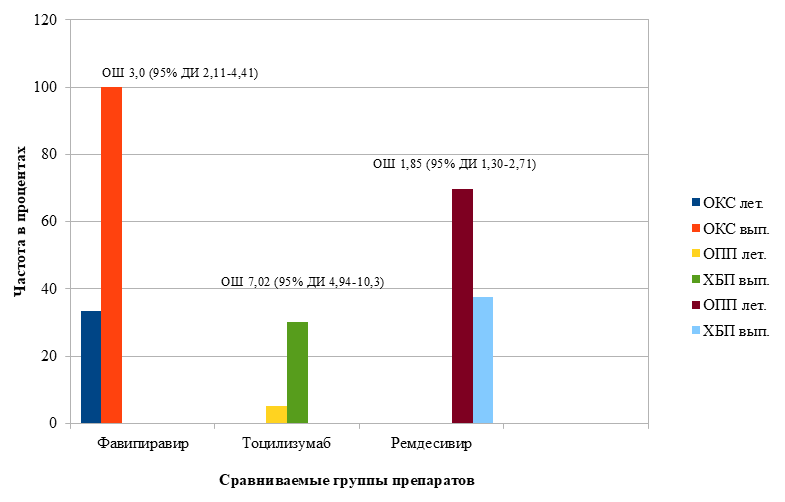
Figure. Comparison of the frequency (in %) of antiviral therapy with favipiravir in 2 groups of patients with acute coronary syndrome, deceased and discharged (ACS fatal and discharged), remdesivir in 2 groups of patients with acute kidney injury and chronic kidney disease, deceased and discharged (AKI fatal and CKD discharged) and tocilizumab and the values of the odds ratio (OR) 95% confidence interval in the compared groups
According to the data obtained in the study, the administration of the nucleoside analogue antiviral drug remdesivir in COVID-19 patients with renal dysfunction without AMI may exert nephrotoxic effects and worsen the life prognosis of these patients. Compared to the group of surviving patients without ACS (Group 4), the frequency of drug use in the deceased group (Group 2) exceeded this indicator by 31.9%, with an odds ratio (OR) of 1.85 (95% CI 1.30–2.71; significant difference, p2-4 <0.03). When comparing the frequency of use of this NA drug in groups of discharged and deceased patients with ACS and AMI, the direction of the difference was similar, with a difference of 16.8% and within the limits of statistical significance — OR 1.29 (95% CI 0.91–1.89; p1-3=0.05), which may be related to the pronounced nephrotoxic effect of this drug not only in groups of patients with acute and chronic renal dysfunction, but also to the role of renal injury in the genesis of fatal outcomes in patients with COVID-19 with acute coronary pathology.
In this study, in the section on assessing the efficacy and safety of baseline and symptomatic pharmacotherapy administered to hospitalized COVID-19 patients with acute myocardial infarction, including during antiviral therapy, we noted that the use of favipiravir was associated with a lower risk of fatal outcomes in patients with AMI. This suggests that the drug may have positive effects not only on viral inflammatory processes but also may possess cardioprotective properties and reduce the severity of myocardial damage in COVID-19. Such properties of the drug were not known in the pre-COVID period. According to pharmaceutical reference books (Register of Medicines of Russia, 2020–2024, Vidal Drug Reference, 2024), favipiravir is a prodrug whose active cellular metabolite, favipiravir ribosyltriphosphate, has a mechanism of action not known in other antiviral drugs synthesized based on nucleosides or their analogues, as it includes a phosphoribosylation step of the pseudonucleic pyrazine base [10, 11]. Based on this, it was hypothesized that the drug participates in oxidative phosphorylation processes and energy supply to myocytes and has a positive effect on myocardial nutrition [12, 13]. In the subsequent period, in a series of clinical trials in 2020–2022, evidence of the efficacy of favipiravir in the treatment of COVID-19 was obtained. When the course of therapy was started in a timely manner, the drug significantly increased patient survival, reduced viral load, decreased the need for mechanical ventilation, and shortened hospital stay [14, 15]. At the same time, in clinical settings, the drug exhibited a number of adverse effects, as with most other antiviral drugs, so favipiravir is not recommended during pregnancy [16, 17].
The closest nucleoside analogues to favipiravir in terms of mechanism of action, approved for COVID-19 therapy in Russia and several other countries, are remdesivir and molnupiravir [13, 18]. In this study, we established that the use of remdesivir in COVID-19 patients with renal injury and dysfunction may be associated with its nephrotoxic effect and negative impact on disease outcome, which was independent of dose and duration of drug administration. It was significantly more frequently prescribed in groups of deceased patients with COVID-19 and AKI, compared to surviving patients with signs of dysfunction and chronic kidney pathology. In groups of patients with COVID-19 and ACS, these differences were less pronounced but statistically significant, which may be related to the lesser severity of nephrotoxic effects of the drug in coronary patients with initially intact renal function.
In the available pharmaceutical literature of the recent period, the drug's role in the development of hepatorenal failure in humans is not excluded. It has been established that remdesivir is poorly excreted unchanged in urine, but its main metabolite GS-441524 is excreted by the kidneys, and the concentration of metabolites in plasma may theoretically increase in patients with impaired renal function. The excipient betadex sulfobutyl ether sodium is excreted by the kidneys and accumulates in patients with reduced renal function. For this reason, remdesivir is not recommended for patients with an estimated glomerular filtration rate (eGFR) <30 mL/min/1.73 m² (Wikipedia, 2024). In this regard, the question of the possibility and safety of the used doses of remdesivir in patients with COVID-19 and CKD apparently requires further study.
In our study, when comparing data on the frequency, doses, and duration of use in groups of discharged and deceased hospitalized patients with COVID-19 and pneumonia of 11 studied antiviral drugs, none of these nucleoside analogues and monoclonal antibodies showed an association with negative outcomes in patients with ACS (except for the NA remdesivir). However, the total frequency of prescription of antiviral drugs from the monoclonal antibody (mAb) group was significantly higher in cases of fatal outcomes in the hospital, while surviving and discharged patients with AMI who underwent PCI received such therapy 30% less frequently. From the data obtained, it follows that antiviral drugs from the nucleoside analogue group (specifically favipiravir) may have a positive effect on the course and outcomes of this viral infection in acute coronary injury, while the efficacy and safety of monoclonal antibodies require further study.
The few randomized studies on the use and evaluation of the efficacy of mAb drugs with interleukin-6 receptor antagonist properties in patients with acute coronary syndrome and COVID-19 over the last 5-year period in available information databases are mainly represented by publications of fragments of the Norwegian ASSAIL-MI study by Anstensrud AK et al. (2019) in patients with ST-segment elevation acute coronary syndrome who underwent instrumental coronary reperfusion and infusion of the interleukin-6 inhibitor tocilizumab [19]. The study showed that this therapy was associated with better preservation of myocardial viability compared to placebo. Microvascular coronary thrombosis was less pronounced in the group of patients receiving tocilizumab therapy, but no significant difference in final infarct size between tocilizumab and placebo was found by the researchers [19–21].
In our study, only with the use of this antiviral drug from the mAb group — an interleukin-6 receptor antagonist — were signs of increased survival of patients with COVID-19 and multiple organ damage, including acute kidney injury, AMI, and pneumonia, observed.
According to literature data, a positive effect on disease prognosis when treating hospitalized patients with drugs from this group was previously noted in a number of randomized studies on the treatment of severe COVID-19 patients with multiple organ damage using interleukin-6 receptor antagonists from the mAb group. However, the effect of therapy on the state of the myocardium and renal function of patients was not analyzed in these studies. In the international, multifactorial, randomized REMAP-CAP study published by researchers from St. Mary's Hospital (London, England) Gordon A.C. et al. (2021), the efficacy of the combination of mAb drugs tocilizumab and sarilumab was evaluated in severe hospitalized adult patients with complicated COVID-19 with organ failure, within 24 hours of starting organ support in the intensive care unit (ICU). Based on the results, it was concluded that in hospitalized patients with critical COVID-19 receiving organ support in intensive care units, treatment with interleukin-6 receptor antagonists tocilizumab and sarilumab improved outcomes, including survival statistics [22].
Evaluation of the efficacy of the mAb drug tocilizumab in adult patients with COVID-19 hospitalized with organ changes, hypoxia symptoms, and signs of systemic inflammation was also the goal of the British randomized RECOVERY trial (Randomised Evaluation of COVID-19 Therapy). Based on the results, the authors concluded that in hospitalized patients with COVID-19 with hypoxia and signs of systemic inflammation, therapy with the mAb drug tocilizumab was associated with improved survival and several other clinical outcomes [23].
According to the randomized multicenter COVACTA study evaluating the efficacy and safety of the drug in hospitalized patients with COVID-19 with severe acute respiratory syndrome, which examined its effect on elimination and humoral response induced by coronavirus 2 (SARS-CoV-2). Tocilizumab did not reduce 28-day mortality but shortened the duration of patients' stay in the intensive care unit [24, 25].
In most cases, mAb drugs with interleukin-6 receptor antagonist properties (anti-IL-6 mAbs) are indicated for severe COVID-19 and the clinical picture of a developed cytokine storm. In 2023, WHO recommendations [26] and the UK National Institute for Health and Care Excellence (NICE) named tocilizumab as the only anti-IL-6 mAb, while the US National Institutes of Health document [27] and Australian guidelines listed two anti-IL-6 mAb drugs — tocilizumab and sarilumab [28], (cited in [29]).
In our study, it was established that COVID-19 patients with ACS and AMI in groups with different disease outcomes received antiviral therapy in the hospital significantly less frequently, on average by 22%, than in comparison groups of patients without signs of acute coronary pathology. No signs of negative impact of the applied antiviral drugs from the mAb and NA groups, except for remdesivir, on the outcomes of acute myocardial infarction were identified in this study. Possible cardio- and nephroprotective effects were noted in the treatment of patients with ACS and AKI with the nucleoside analogue antiviral drug favipiravir. A positive effect on survival rates of patients with COVID-19 and viral pneumonia, against the background of renal injury, was established with the use of the mAb drug interleukin-6 receptor antagonist — tocilizumab. Nephrotoxic effects, among the entire list of applied antiviral drugs, were noted only with the use of the nucleoside analogue remdesivir in patients with COVID-19 with renal dysfunction of various etiologies and to a lesser extent in AMI.
1. Guo T, Fan Y, Chen M, et al. Cardiovascular Implications of Fatal Outcomes of Patients With Coronavirus Disease 2019 (COVID-19). JAMA Cardiol. 2020 Jul 1;5(7):811-818. doi: 10.1001/jamacardio.2020. 1017. Erratum in: JAMA Cardiol. 2020 Jul 1;5(7):848. doi: 10.1001 jamacardio.2020.1722.
2. Bavishi C, Bonow RO, Trivedi V, et al. Special Article - Acute myocardial injury in patients hospitalized with COVID-19 infection: A review. Prog Cardiovasc Dis. 2020 Sep-Oct;63(5):682-689. doi: 10.1016/j.pcad.2020.05.013.
3. Временные методические рекомендации: Профилактика, диагностика и лечение новой коронавирусной инфекции (COVID-19). Версия 15 (02.22.2022). МЗ РФ.
4. Шляхто Е. В., Конради А. О., Арутюнов Г. П., и др. Руководство по диагностике и лечению болезней системы кровообращения в контексте пандемии COVID-19. Российский кардиологический журнал. 2020;25(3):3801. doi:10.15829/1560-4071-2020-3-3801
5. Тарловская Е.И., Арутюнов А.Г., Конради А.О., и др. Анализ влияния препаратов базовой терапии, применявшихся для лечения сопутствующих заболеваний в период, предшествующий инфицированию, на риск летального исхода при новой коронавирусной инфекции. Данные международного регистра «Анализ динамики Коморбидных заболеваний у пациентов, перенесших инфицирование SARS-CoV-2» (AКТИВ SARS-CoV-2). Кардиология. 2021;61(9):20-32. Doi: 10.18087/cardio.2021.9.n1680.
6. Рекомендации ESC/EACTS по реваскуляризации миокарда 2014. Рабочая группа по реваскуляризации миокарда Европейского общества кардиологов (ESC) и Европейской ассоциации кардиоторакальных хирургов (EACTS). Разработаны с участием Европейской ассоциации по чрескожным сердечно-сосудистым вмешательствам (EAPCI). Российский кардиологический журнал. 2015;2(118): 5-81. http://dx.doi.org/10.15829/1560-4071-2015-02-5-81.
7. Valgimigli M, Bueno H, Byrne RA, et al; ESC Scientific Document Group; ESC Committee for Practice Guidelines (CPG); ESC National Cardiac Societies. 2017 ESC focused update on dual antiplatelet therapy in coronary artery disease developed in collaboration with EACTS: The Task Force for dual antiplatelet therapy in coronary artery disease of the European Society of Cardiology (ESC) and of the European Association for Cardio-Thoracic Surgery (EACTS). Eur Heart J. 2018 Jan 14;39(3):213-260. doi: 10.1093/eurheartj/ehx419.
8. Третье универсальное определение инфаркта миокарда. Российский кардиологический журнал. 2013;(2s1):3-16. Doi: 10.15829/1560-4071-2013-2s1-3-16
9. Ibanez B, James S, Agewall S, et al; ESC Scientific Document Group. 2017 ESC Guidelines for the management of acute myocardial infarction in patients presenting with ST-segment elevation: The Task Force for the management of acute myocardial infarction in patients presenting with ST-segment elevation of the European Society of Cardiology (ESC). Eur Heart J. 2018 Jan 7;39(2):119-177. doi: 10.1093/eurheartj/ehx393.
10. Peng Q, Peng R, Yuan B, et al. Structural Basis of SARS-CoV-2 Polymerase Inhibition by Favipiravir. Innovation (Camb). 2021 Feb 28;2(1): 100080. doi: 10.1016/j.xinn.2021.100080.
11. Latosińska M, Latosińska JN. Favipiravir Analogues as Inhibitors of SARS-CoV-2 RNA-Dependent RNA Polymerase, Combined Quantum Chemical Modeling, Quantitative Structure-Property Relationship, and Molecular Docking Study. Molecules. 2024 Jan 16;29(2):441. doi: 10.3390/molecules29020441.
12. Gunaydin-Akyildiz A, Aksoy N, Boran T, et al. Favipiravir induces oxidative stress and genotoxicity in cardiac and skin cells. Toxicol Lett. 2022 Dec 1;371:9-16. doi: 10.1016/j.toxlet.2022.09.011.
13. Wang Y, Li P, Rajpoot S, et al. Comparative assessment of favipiravir and remdesivir against human coronavirus NL63 in molecular docking and cell culture models. Sci Rep. 2021 Dec 6;11(1):23465. doi: 10.1038/s41598-021-02972-y.
14. Agrawal U, Raju R, Udwadia ZF. Favipiravir: A new and emerging antiviral option in COVID-19. Med J Armed Forces India. 2020 Oct; 76(4):370-376. doi: 10.1016/j.mjafi.2020.08.004.
15. Joshi S, Parkar J, Ansari A, et al. Role of favipiravir in the treatment of COVID-19. Int J Infect Dis. 2021 Jan;102:501-508. doi: 10.1016/j.ijid.2020.10.069.
16. Tırmıkçıoğlu Z. Favipiravir exposure and pregnancy outcome of COVID-19 patients. Eur J Obstet Gynecol Reprod Biol. 2022 Jan;268: 110-115. doi: 10.1016/j.ejogrb.2021.12.001.
17. Ertem O, Guner O, Incir C, et al. The outcomes of favipiravir exposure in pregnancy: a case series. Arch Gynecol Obstet. 2023 May;307(5):1385- 1395. doi: 10.1007/s00404-022-06615-z.
18. Dufour I, Devresse A, Scohy A, et al. Safety and efficiency of molnupiravir for COVID-19 patients with advanced chronic kidney disease. Kidney Res Clin Pract. 2023 Mar;42(2):275-278. doi: 10.23876/j.krcp.22.194.
19. Anstensrud AK, Woxholt S, Sharma K, et al. Rationale for the ASSAIL-MI-trial: a randomised controlled trial designed to assess the effect of tocilizumab on myocardial salvage in patients with acute ST-elevation myocardial infarction (STEMI). Open Heart. 2019 Oct 15;6(2):e001108. doi: 10.1136/openhrt-2019-001108.
20. Broch K, Anstensrud AK, Woxholt S, et al. Randomized Trial of Interleukin-6 Receptor Inhibition in Patients With Acute ST-Segment Elevation Myocardial Infarction. J Am Coll Cardiol. 2021 Apr 20;77(15):1845- 1855. doi: 10.1016/j.jacc.2021.02.049.
21. Huse C, Anstensrud AK, Michelsen AE, et al. Interleukin-6 inhibition in ST-elevation myocardial infarction: Immune cell profile in the randomised ASSAIL-MI trial. EBioMedicine. 2022 Jun;80:104013. doi: 10.1016/j.ebiom.2022.104013.
22. REMAP-CAP Investigators; Gordon AC, Mouncey PR, Al-Beidh F, et al. Interleukin-6 Receptor Antagonists in Critically Ill Patients with Covid-19. N Engl J Med. 2021 Apr 22;384(16):1491-1502. doi: 10.1056/NEJMoa2100433.
23. RECOVERY Collaborative Group. Tocilizumab in patients admitted to hospital with COVID-19 (RECOVERY): a randomised, controlled, open-label, platform trial. Lancet. 2021 May 1;397(10285):1637-1645. doi: 10.1016/S0140-6736(21)00676-0.
24. Rosas IO, Bräu N, Waters M, et al. Tocilizumab in Hospitalized Patients with Severe Covid-19 Pneumonia. N Engl J Med. 2021 Apr 22;384(16):1503-1516. doi: 10.1056/NEJMoa2028700.
25. Rosas IO, Bräu N, Waters M, et al. Tocilizumab in patients hospitalised with COVID-19 pneumonia: Efficacy, safety, viral clearance, and antibody response from a randomised controlled trial (COVACTA). EClinicalMedicine. 2022 May;47:101409. doi: 10.1016/j.eclinm.2022.101409.
26. Clinical management of COVID-19: living guideline, June 2025. Available at https://www.who.int/publications/i/item/B09467 Режим доступа: 20.05.2026.
27. COVID-19 Treatment Guidelines Panel. Coronavirus Disease 2019 (COVID-19) Treatment Guidelines. National Institutes of Health. Available at https://www.cfpr.org/files/covid19treatmentguidelines.pdf. Режим доступа: 20.05.2026.
28. Australian guidelines for the clinical care of people with COVID-19. Available at https://app.magicapp.org/#/guideline/L4Q5An. Режим доступа: 20.05.2026.
29. Зырянов С.К., Бутранова О.И., Абрамова А.А. Эффективность ингибиторов интерлейкина-6 в качестве инструмента упреждающей противовоспалительной терапии при COVID-19. Качественная клиническая практика. 2024;(1):4-16. Doi: 10.37489/2588-0519-2024-1-4-16. EDN: DSVZBR.
Natalia V. Teplova — Dr. Sci. (Med.), professor, Head of the Department of Clinical Pharmacology named after Yu. B. Belousov
Moscow
The authors state that there is no conflict of interest
Evgeny M. Evsikov — Dr. Sci. (Med.), professor, Department of Clinical Pharmacology named after Yu. B. Belousov
Moscow
The authors state that there is no conflict of interest
Margarita A. Chobanyan — Postgraduate Student, Department of Clinical Pharmacology named after Yu. B. Belousov, Institute of Clinical Pharmacology
Moscow
The authors state that there is no conflict of interest
Argishti G. Vardanyan — assistant, Department of Clinical Pharmacology named after Yu. B. Belousov
Moscow
The authors state that there is no conflict of interest
Teplova N.V., Evsikov E.M., Chobanyan M.A., Vardanyan A.G. Features of antiviral drug treatment in patients with COVID-19 and viral pneumonia with acute myocardial infarction. Kachestvennaya Klinicheskaya Praktika = Good Clinical Practice. 2026;(2):73-89. (In Russ.) https://doi.org/10.37489/2588-0519-GCP-0028. EDN: HPPCGN
НАШИ КНИГИ



Другие журналы
"Издательства ОКИ"


ПАРТНЕРЫ

 Email this article (Login required)
Email the author (Login required)
Email this article (Login required)
Email the author (Login required) 121357, Moscow, st. Vatutina, 4, building 2, apt. 22
LLC Publishing House OKI
Tel. +7 (926) 568-17-35
e-mail: clinvest@mail.ru


